
Home › GCSE Art Help › Photography Project Ideas
Stuck for a GCSE Photography project idea? Start with a place you already know. You do not need an expensive camera, a trip abroad or a dramatic subject. A bus stop, street corner, playground or walk home can give you plenty to photograph if you look at how it changes over time.
This guide gives you an original practice brief, a realistic example of how a student could respond, photographers and artists to research, and more GCSE Photography ideas you can make your own. It is practice material, not an examination board question or a ready-made answer for your exam.
What can I photograph for my GCSE Photography project?
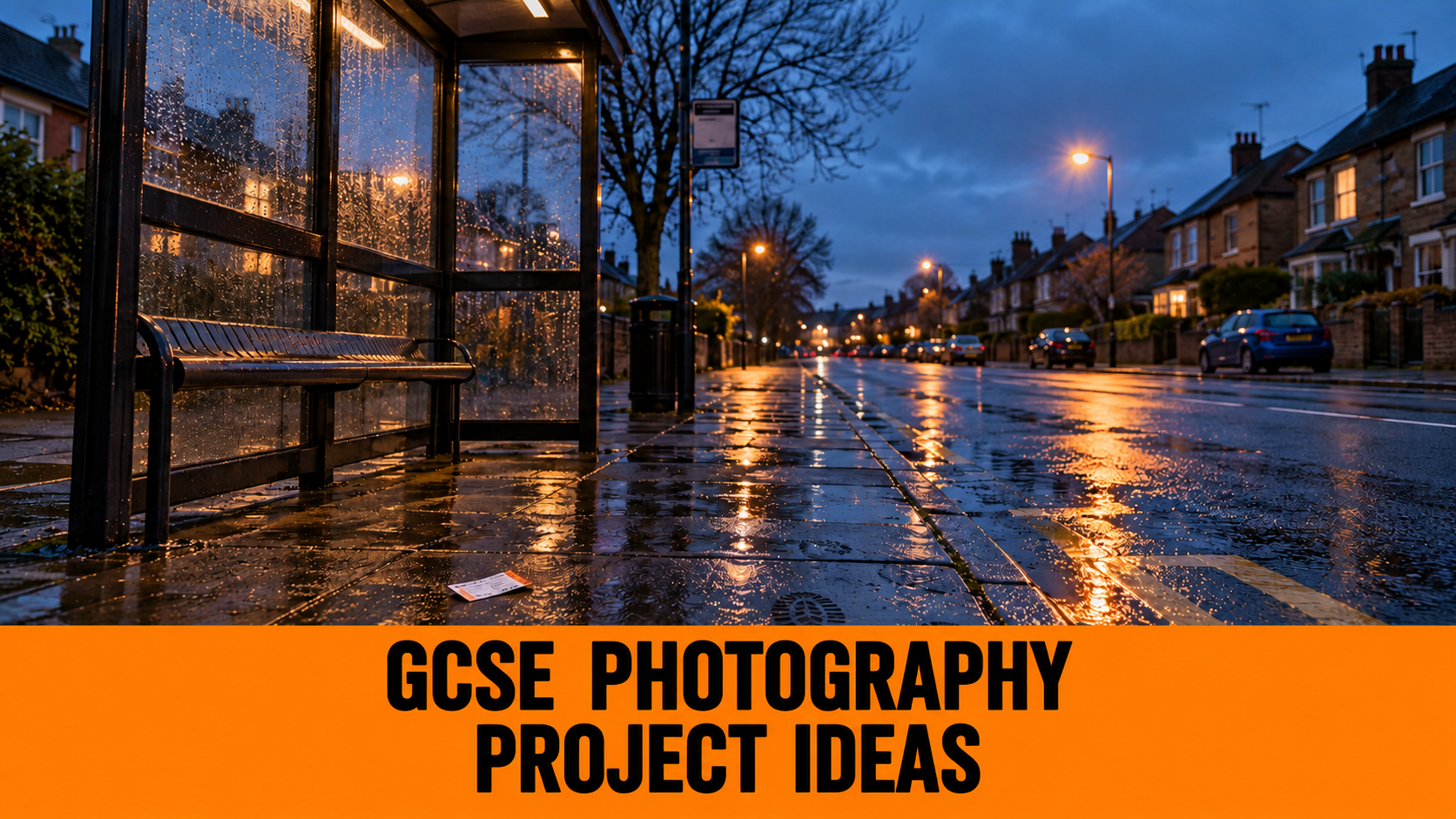
Choose one familiar place that you can visit more than once. Photograph it on different days or at different times. Look for the evidence of people: worn steps, misted windows, taped notices, footprints, things left behind, or the way a space looks when everyone has gone. If photographing a bus stop is awkward, use a school corridor, garden gate, local shopfront or the view from your window instead.
An original practice brief: The Marks We Leave Behind
Practice brief: Investigate the temporary traces people leave in a place you know. Make your own photographs, test different ways of showing change, and develop a personal visual response. Decide what you want your viewer to notice or feel.
This is deliberately open: it could lead to documentary photography, abstract close-ups, a sequence about waiting, or a comparison between a busy place and an empty one. Check your teacher’s guidance if you want to adapt it for an actual externally set assignment.
A possible GCSE Photography response: one bus stop, several visits
First shoot: A student photographs an ordinary bus stop after school. The wide images show the shelter, but the stronger photographs turn out to be closer: a rain-covered window, a scuffed bench, shoe marks and reflected headlights. They return on a dry morning and after rain, using the same viewpoint as well as new close-ups. This makes the changes visible rather than relying on one lucky photograph.
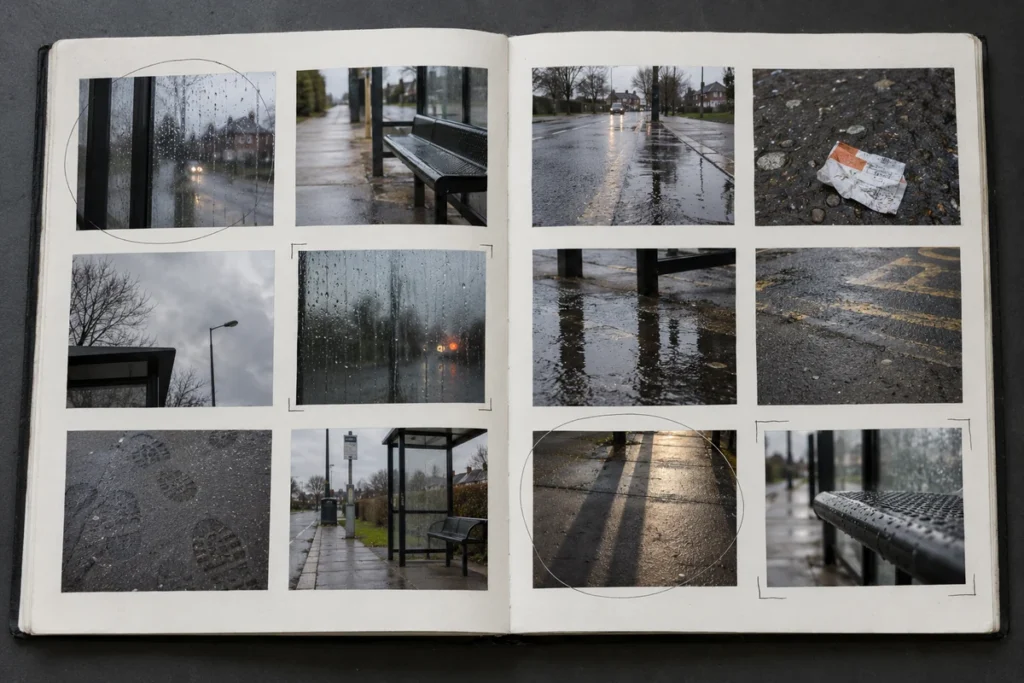
Contact sheet and selection: They put twelve images together, circle four that connect, and write short notes: “The wide shot explains where I am, but the raindrops and marks make the place feel more personal.” They also reject a photograph with an interesting puddle because its background distracts from the idea. Explain your choices like this rather than writing “I like this one.” For a deeper guide, see how to develop GCSE Photography contact sheets.
Experiment and refine: The student compares tight and loose crops, colour and black and white, a sharp background and a blurred one, and a morning image against an evening image. They discover that too much editing makes the series look artificial, so they keep the colours close to what they actually saw. They arrange the selected photographs in several orders before choosing the strongest sequence.
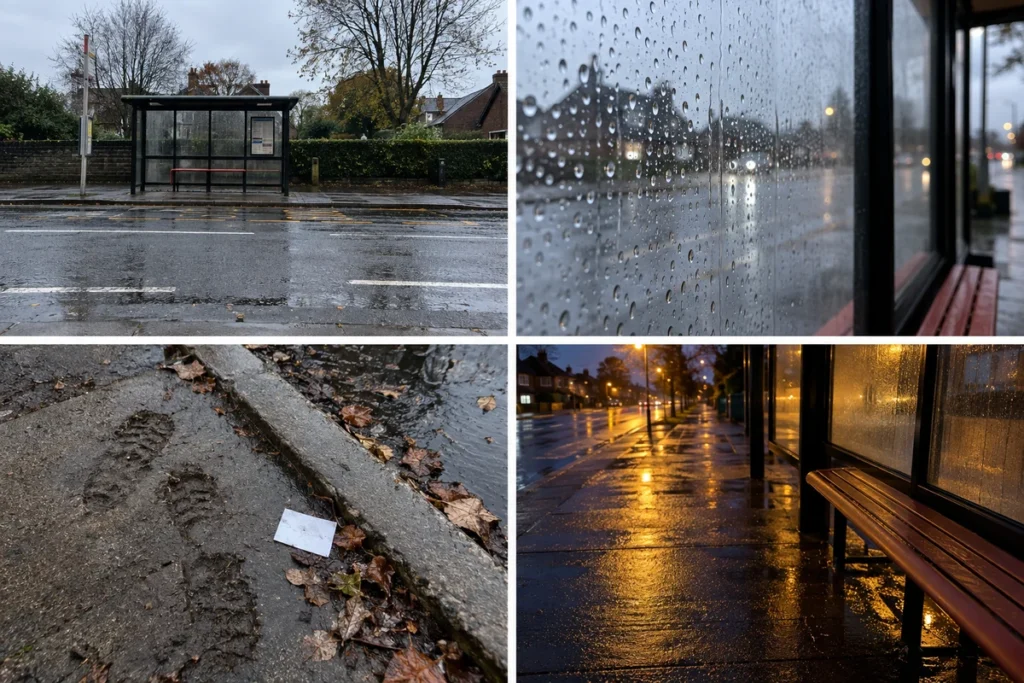
Possible outcome: A four-picture series called After Everyone Leaves moves from the empty shelter to details of the glass and ground, ending with the evening light. Another student could use the same brief and reach a completely different result. What matters is that the final selection grows from the investigation and decisions in the sketchbook.
Which photographers and artists could I research?
| Artist and work | What to look for | One experiment you could try |
|---|---|---|
| Richard Wentworth, Making Do and Getting By | He notices small, surprising arrangements and signs of human activity in everyday places. | Walk a familiar route and photograph five unnoticed arrangements. What might have happened just before each picture? |
| Stephen Gill, Hackney Wick | He spent time photographing one particular area and made a coherent body of work from it. | Return to one local place on several days. Keep a contact sheet and see which details only emerge on later visits. |
| Rut Blees Luxemburg, A Modern Project | Her night photographs make ordinary urban spaces feel atmospheric through available light. | Photograph your place in daylight and in safe evening light, then compare colour, mood and visibility. |
Choose artists because a specific decision in their work helps your own project. In your sketchbook, show the work, identify a choice such as viewpoint or light, try it yourself and explain what you changed. Artist research should lead to your own ideas, not a copy of somebody else’s picture.
Can I use Google Street View for a GCSE Photography project?
You could research Jon Rafman’s Nine Eyes of Google Street View and Michael Wolf’s A Series of Unfortunate Events. Both selected unexpected moments from Google Street View imagery. Their work raises questions about who makes an image, who chooses it, and what a camera records by accident.
For your project, use Street View as a research starting point: explore how a familiar location appeared on the service, then visit it yourself and make your own photographs, crops and sequence. Compare what the automatic camera shows with what you choose to notice. Link to or embed any Street View material only in ways Google permits; Google’s current guidelines say not to publish Street View screenshots. This post therefore uses original illustrative imagery, not Street View captures.
What would I put in my GCSE Photography sketchbook?
| Stage | Useful evidence | What to explain |
|---|---|---|
| AO1: develop | Your question, relevant artist research, initial idea map | What you noticed in the artists’ choices and what you want to investigate. |
| AO3: record | Your own shoots, contact sheets, location notes and observations | What changed between visits and which images tell you something useful. |
| AO2: refine | Crop comparisons, exposure or colour trials, print tests, editing decisions | What you kept, rejected or changed, and why. |
| AO4: present | A selected sequence or set of prints with a clear intention | How the outcome developed from your research, photographs and experiments. |
You can gather evidence for several AOs on the same page; this table is a way to check that your project has a journey. If you want a broader plan, read the GCSE Photography portfolio guide. No particular theme or artist guarantees a grade.
More GCSE Photography project ideas you could make your own
- One window, many days: photograph the same view in different light and weather. Which changes matter to your idea?
- Objects left behind: make a series of lost or discarded objects without moving or staging them. What do the surroundings suggest?
- Routes and routines: photograph the journey you take most often, moving from wide views to details you usually ignore.
- Empty spaces: record a room, pitch, café or corridor just before and just after it is used. How can you suggest people without showing faces?
- Reflections after rain: return to the same pavement or window and see how the view changes. For a wider theme guide, explore reflections in art and photography.
- Changing shadows: photograph the same wall, railing or staircase at different times. See the Light and Shadow project ideas for more routes.
If one of these sounds interesting, narrow it down. “My town” is huge; “the changing marks on the steps outside the library” gives you somewhere to start. Take a first set of photographs before deciding what your final piece will be.
Questions students often ask
Do I need an expensive camera for GCSE Photography?
No. Start with the camera you have, including a phone if your course permits it. Return visits, thoughtful framing, selection and development matter more to this project than equipment.
Can I use this project for my GCSE Art exam?
Use it as practice and inspiration. If you are working on an externally set assignment, your response must follow your board’s actual starting point and your teacher’s instructions. Adapt the investigation to your own question, place, photographs and choices.
How many photographs should I take?
Take enough to have a genuine choice, then edit carefully. Two or three visits with different viewpoints are more useful than hundreds of near-identical pictures. Keep contact sheets so the development is visible.
What if I live somewhere ordinary?
That is an advantage here. Knowing a place helps you notice subtle changes that a visitor may miss. The project is about what you make visible, not finding a spectacular location.
Want an independent view of your own project? You can read about online portfolio feedback and decide whether it would help you choose your next steps.
No responses yet