
A Level Photography is much more than taking attractive pictures. The course asks you to develop personal ideas through original shoots, research, experimentation, informed selection, refinement and a convincing final response. This guide explains the course structure, assessment objectives, portfolio expectations and practical habits that help students make stronger progress.
The short answer – A Level Photography Course explained
A strong Photography A Level portfolio shows a connected creative journey. It makes clear what you intended, what you photographed, which visual sources informed you, what you tested, why you changed direction and how those decisions led to the final work. Expensive equipment cannot replace purposeful ideas and visible development.
On this page
- What is A Level Photography?
- What does the course involve?
- How is A Level Photography assessed?
- AO1, AO2, AO3 and AO4
- How to build a strong portfolio
- A practical project workflow
- Common mistakes to avoid
- Frequently asked questions
What is A Level Photography?
A Level Photography is normally studied as an Art and Design endorsement. You learn to use photography as a visual language: to investigate an idea, make original images, understand relevant practitioners and contexts, experiment with techniques, review your progress and communicate a personal response.
The precise course can vary by centre and exam board, but it may include digital photography, film, camera-less processes, studio lighting, location work, moving image, image manipulation, installation and combinations of photography with other media. AQA’s current Photography subject content gives a useful official overview of possible areas of study.
If you are moving up from GCSE, the biggest difference is usually depth and independence. The GCSE Photography course explained page is useful for comparison, while the A Level Art resources hub brings the wider guidance together.
What does the A Level Photography course involve?

Most students begin with workshops and shorter projects that build technical control and introduce ways of developing ideas. Over time, the work becomes more individual. Your portfolio may be physical, digital or a mixture of both, but it should preserve evidence of thinking rather than show only finished photographs.
Ideas and context
Investigate a question that gives you room to think. Research photographers, artists, films, places, histories or visual traditions because they help you make decisions—not merely because you need to fill a page.
Making and refinement
Plan and carry out original shoots, review contact sheets, select with reasons, test alternatives and reshoot. Editing is most valuable when it responds to your intentions rather than applying effects at random.
How is A Level Photography assessed?
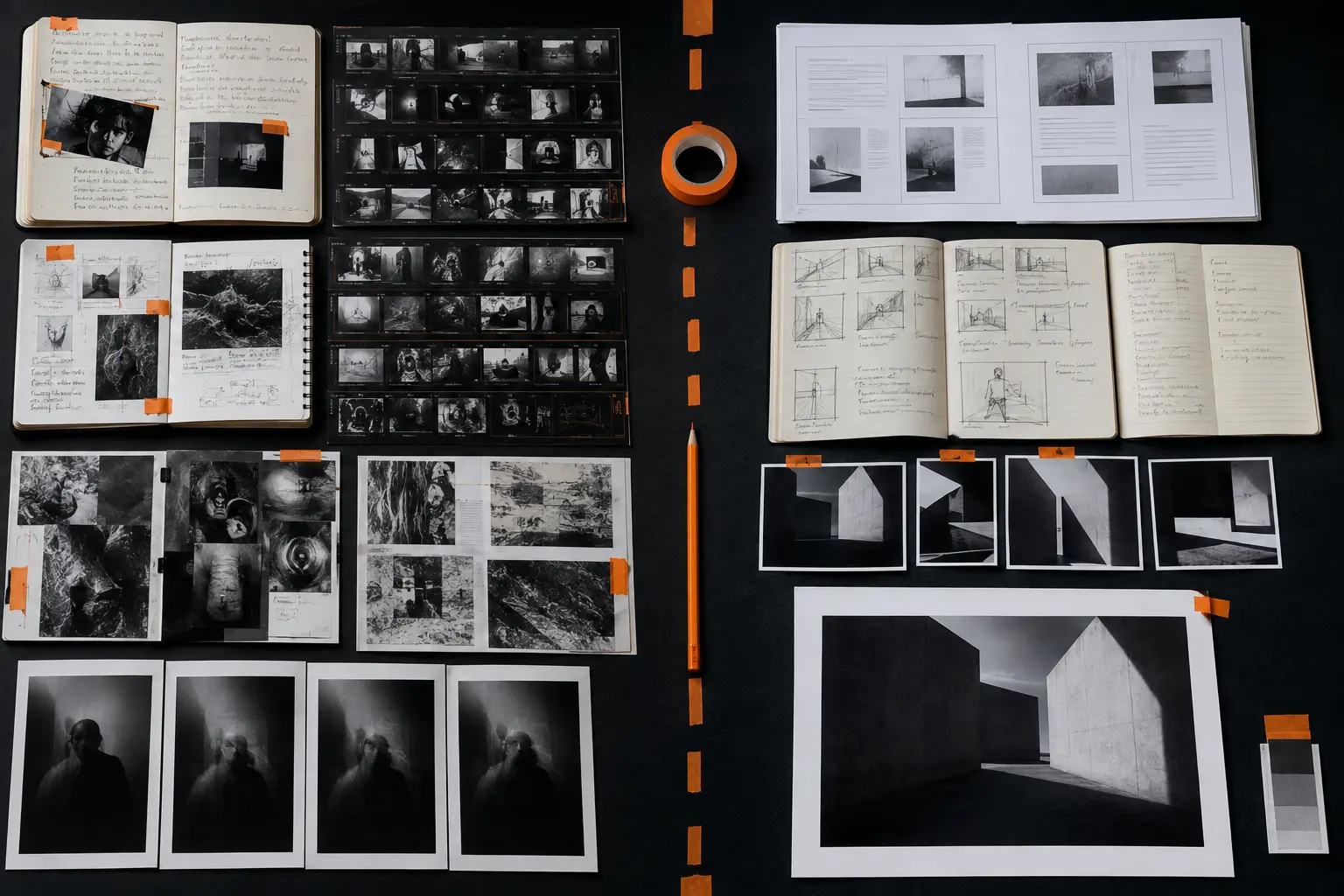
The course is obviously assessed by looking at your A Level Photography portfolio. Your A Level Photography coursework and your A Level Photography exam / controlled test. Across the main UK specifications, the full A Level is commonly divided into a Personal Investigation worth 60% and an Externally Set Assignment worth 40%. The externally set component normally culminates in a supervised period of 15 hours. Always check the current specification used by your school or college, because wording, dates and administrative requirements can change.
| Component | Typical weighting | What it involves |
|---|---|---|
| Personal Investigation | 60% | A sustained practical investigation supported by contextual understanding and a written element, developed from a personal starting point. |
| Externally Set Assignment | 40% | Preparatory work developed from an exam-board starting point, followed by a supervised 15-hour period in which the response is completed. |
Official information: AQA scheme of assessment, Pearson Edexcel Art and Design, OCR specification at a glance and Eduqas AS/A Level Art and Design.
AO1, AO2, AO3 and AO4 in Photography
Both components are assessed through four objectives. They are easiest to understand as a connected cycle, not four unrelated folders. Research can prompt a shoot; reviewing that shoot can suggest an experiment; the experiment may reveal that more recording is needed; those decisions then shape the final response.
| Objective | In a Photography portfolio | Detailed guide |
|---|---|---|
| AO1: Develop | Investigate relevant sources, understand context and develop a personal line of enquiry. | A Level Art AO1 explained |
| AO2: Refine | Experiment purposefully with media, techniques and processes, then review and refine. | A Level Art AO2 explained |
| AO3: Record | Record observations, ideas and insights through original photography, contact sheets and meaningful annotation. | A Level Art AO3 explained |
| AO4: Present | Create a personal, informed and meaningful response that connects clearly to the investigation. | A Level Art AO4 explained |
Your A Level Photography Personal Investigation is where you show your individual approach.
How to build a strong A Level Photography portfolio
1. A-Level Photography – Choose a question, not just a subject
“Portraits” is a subject; “How can shadow conceal and reveal identity?” is a question. A productive question creates reasons to research, shoot, compare, reshoot and make decisions. It can change as the project develops, but it should give the work direction.
2. Make research active
Describe only what is needed, then analyse choices: framing, light, colour, focus, sequence, scale, material and context. Most importantly, test what the research makes you wonder. A practical response or reshoot is stronger evidence than a copied biography. The site’s photography in the style of Saul Leiter resource is one example of turning observation into practical investigation.
3. A-Level Photography – Edit contact sheets with reasons
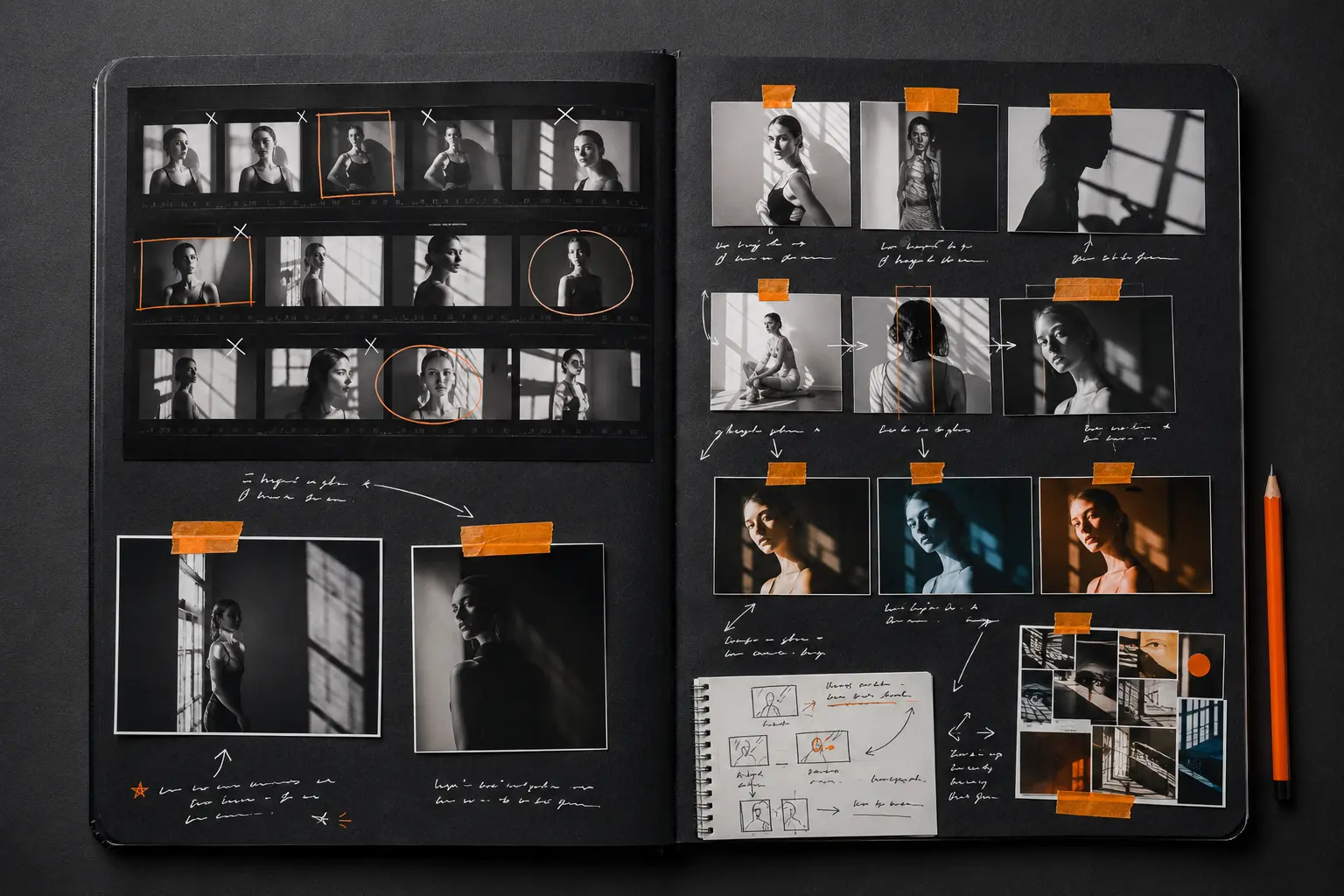
Include enough of the shoot to show genuine selection. Mark successful and unsuccessful frames, then explain specific decisions. “I like this” is weak; “the low viewpoint compresses the figure against the doorway, but the background light competes with the face, so I will repeat the setup later in the day” creates a useful next step.
4. A Level Photography Course explained – Show purposeful experiments
Test variables that matter to your idea: lighting direction, shutter speed, depth of field, lens choice, viewpoint, staging, sequence, print surface, scale, colour treatment or physical manipulation. Compare results and keep only the evidence needed to explain the decision.
5. A-Level Photography – Reshoot and refine
One shoot rarely produces a fully resolved project. Strong portfolios revisit promising ideas with better control. A reshoot is not an admission that the first attempt failed; it is visible evidence that you can evaluate and improve your work.
6. A Level Photography Course Explained: Curate the Final Response
Select, sequence and present the final work so the form supports the meaning. Consider whether the outcome should be a single image, series, book, projection, installation, moving image or mixed-media response. More images are not automatically stronger; coherence and intention matter.
A practical A Level Photography workflow

- Plan: write the purpose of the shoot, location, subject, equipment, light and two or three variables to test.
- Shoot more than one solution: change viewpoint, distance, framing, timing and exposure rather than repeating the same frame.
- Back up immediately: keep the original files in at least two places and use consistent folders and filenames.
- Build a contact sheet: review the whole shoot before editing only your favourites.
- Select and annotate: explain what works, what does not and what you will do next.
- Experiment: make comparisons that answer a question about technique, meaning or presentation.
- Reshoot: use the evidence to improve control and deepen the idea.
- Review against all four AOs: look for gaps while there is still time to act.
- Curate: choose the sequence, scale and format that best communicate the project.
Common mistakes to avoid
- Starting with a final image in mind: this can make the research and experiments feel added afterwards.
- Copying a photographer’s surface style: use contextual research to generate decisions, not to imitate an image as closely as possible.
- Showing only successful photographs: assessment needs visible selection, evaluation and development.
- Adding effects without a reason: technique should support the idea.
- Writing description instead of analysis: connect observations to your own next action.
- Leaving annotation until the end: record decisions while they are still fresh.
- Ignoring file management: missing originals and broken links can undo months of work.
- Treating AO1–AO4 as separate tasks: the strongest evidence often supports more than one objective.
Is Photography the right A Level for you?
The course suits students who are curious, visually observant and willing to repeat, edit and improve. You do not need to arrive with a fixed style, but you do need to make work regularly and respond to feedback. If you are comparing endorsements, read the A Level Fine Art course explained and A Level Graphic Communication course explained guides as well.
A Level Photography FAQs
What is A Level Photography?
It is an Art and Design qualification in which students develop ideas through original photographic work, contextual research, experimentation, refinement and resolved outcomes.
How is A Level Photography assessed?
Most current UK specifications assess a Personal Investigation worth 60% and an Externally Set Assignment worth 40%. Both are marked through AO1–AO4. Confirm the precise current requirements with your centre and exam board.
Do I need an expensive camera?
No. Reliable access to suitable equipment helps, but purposeful ideas, control, experimentation and refinement matter more than the price of the camera. Many centres provide equipment, so check before buying anything.
What should the portfolio include?
Show intentions, original shoots, contact sheets, contextual research, technical and visual experiments, selection decisions, reshoots, refinement and a coherent final response. The development must be easy to follow.
Is there a written essay?
The Personal Investigation normally includes a written element. Its exact requirements depend on the current specification, so follow your teacher’s and exam board’s guidance.
Want clear, individual feedback on your portfolio?
Get help identifying what is working, where the development is thin and which practical next steps could make the project more coherent.