
Creative support for your BTEC journey.
Clear guidance, practical advice and real examples to help you succeed in BTEC Level 1/2 Art and Design. Whether you’re just getting started or developing your final pieces, this site gives you the tools, structure and inspiration to produce your best work.

TWO COMPONENTS
A clear breakdown of both Component 1 and Component 2

120 GUIDED HOURS
Make the most of your time with focussed support

PRACTICAL PROJECTS
Step-by-step guidance, tips and student examples

LEVEL 1 PASS TO LEVEL 2 DISTINCTION*
Support at every level to help you progress
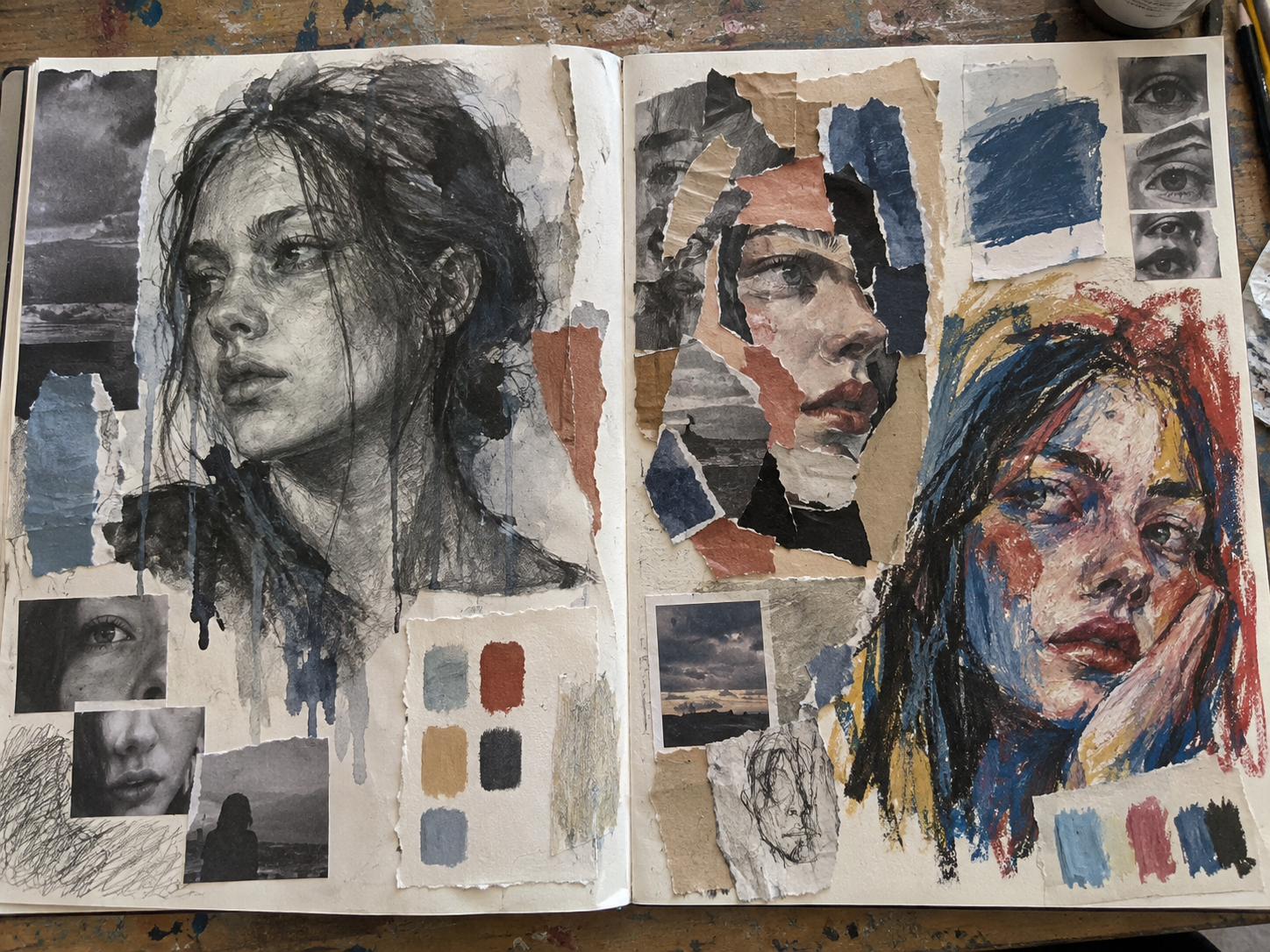
COMPONENT 1: CREATIVE PRACTICE
Explore your ideas, experiment with materials and develop a personal project. Find guidance on how to show your creative journey and build a strong body of work.
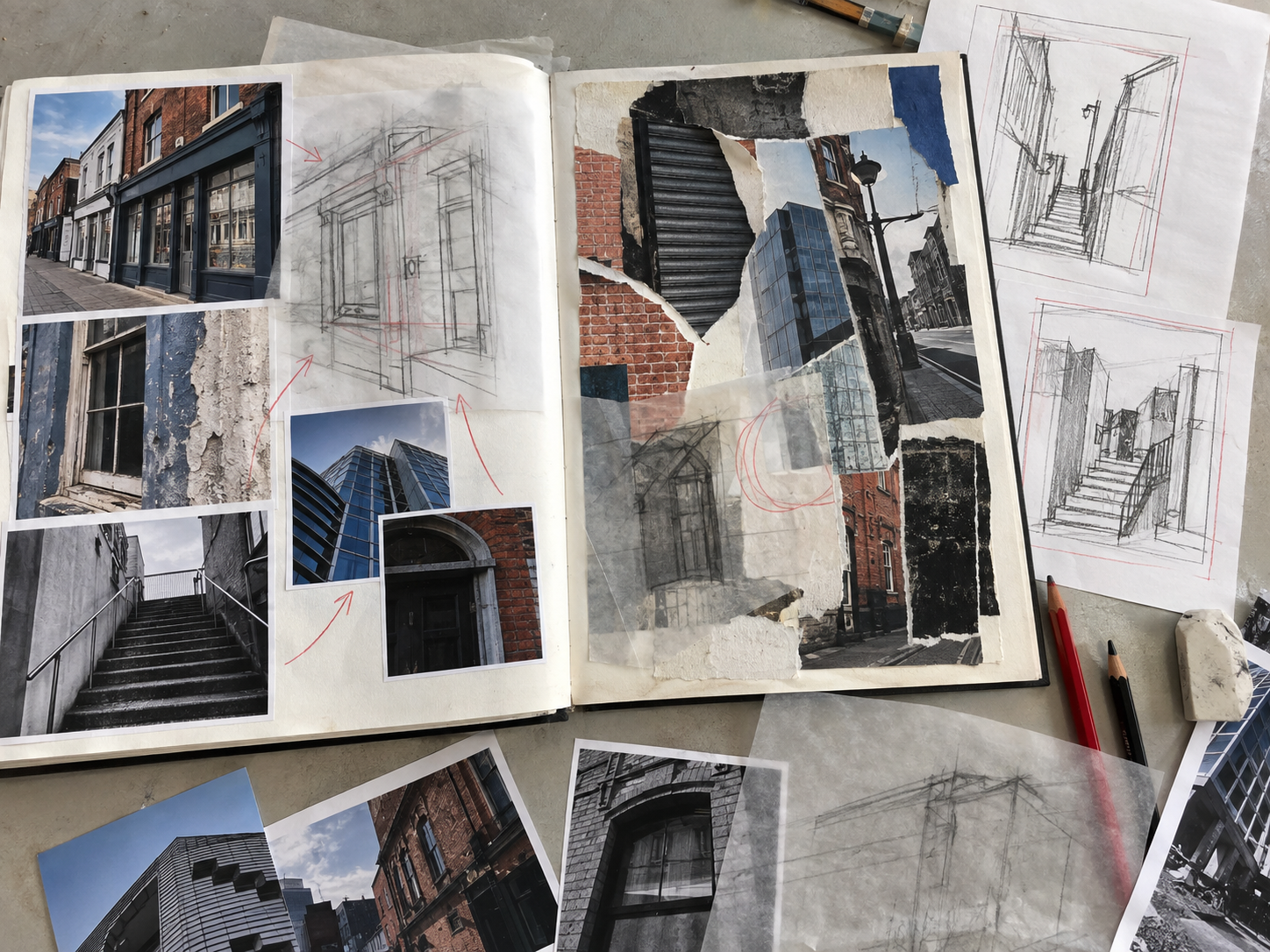
COMPONENT 2: RESPONDING TO A BRIEF
Learn how to analyse a brief, develop your ideas and create a meaningful final outcome. Get tips on research, planning, presenting and meeting the assessment criteria.
What should your evidence show?
A successful project shows a clear and honest creative process. Use these five stages to structure your work.

INVESTIGATE
Explore the theme, gather visual research and find inspiration

EXPERIMENT
Try out materials, tools, techniques and ideas. Record what works and what doesn’t.

DEVELOP
Take your best ideas forward and refine your concepts.

REFINE
Make improvements, consider feedback and resolve your final outcome.

PRESENT
Bring your work together clearly, showing your creative journey.
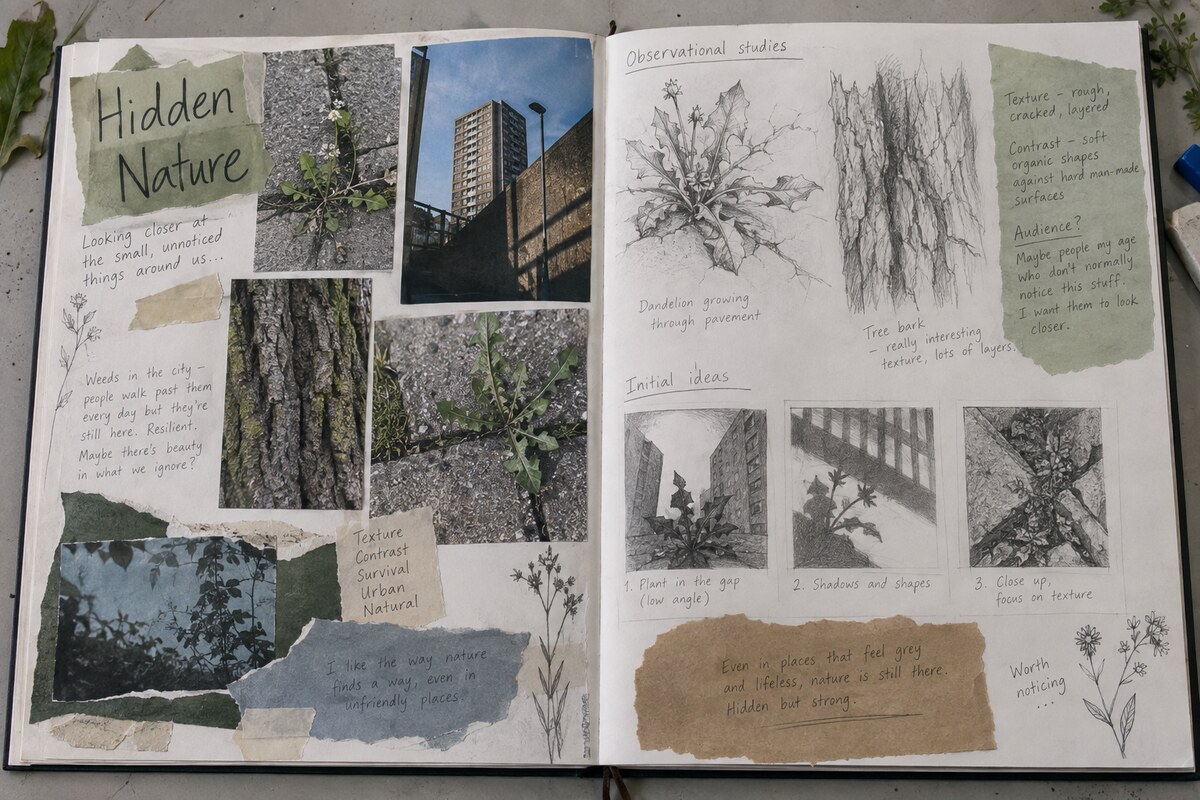
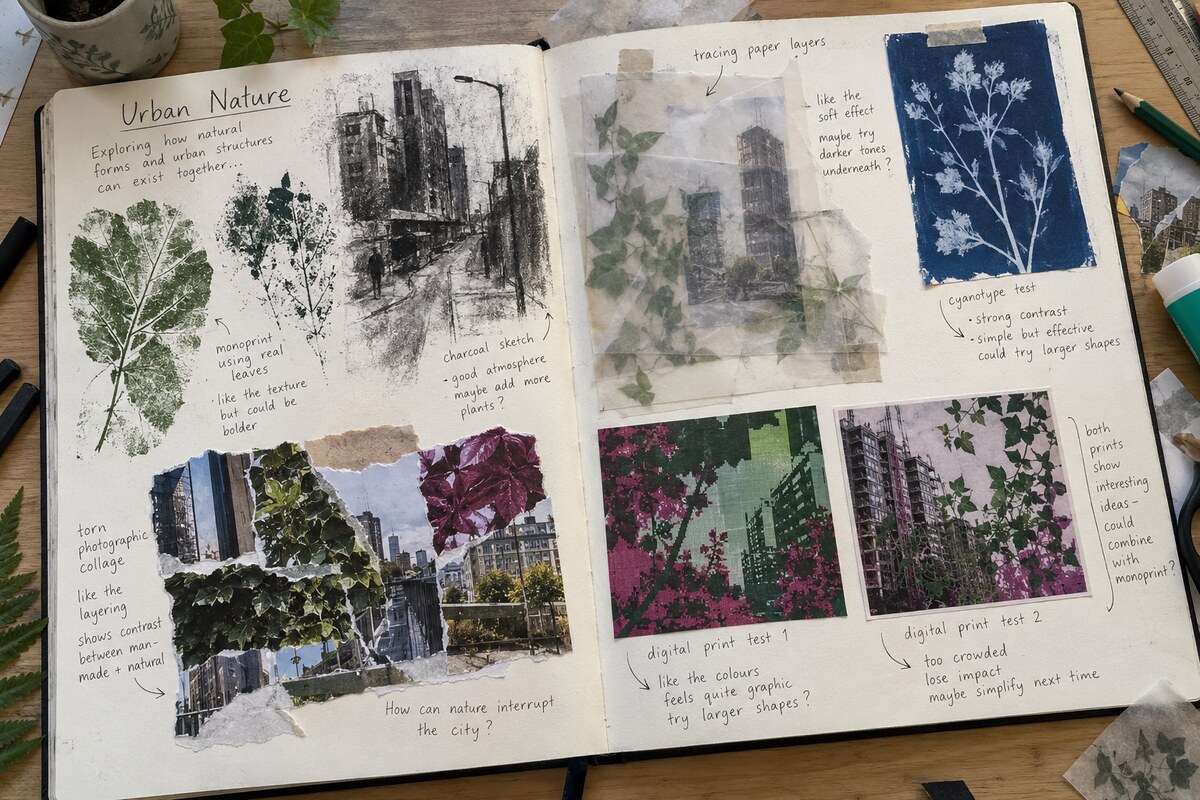
Student Work Examples
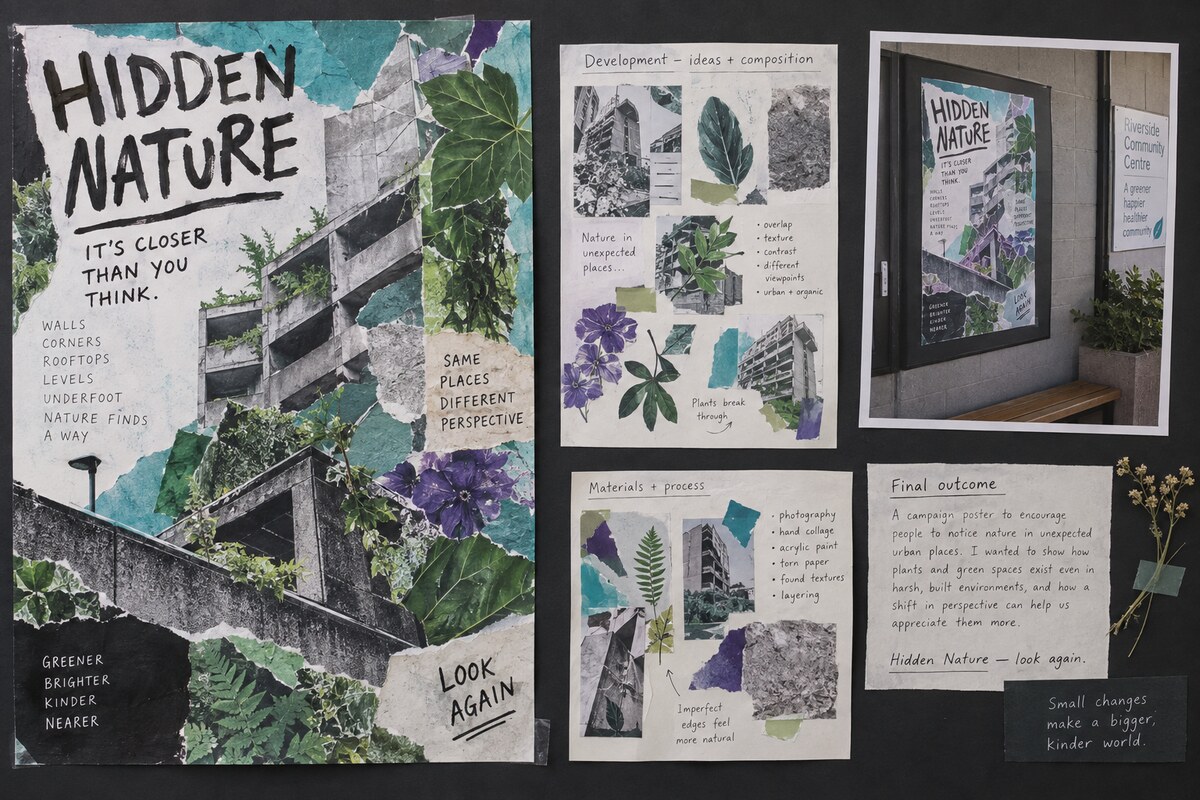
Student work exemplars from three disciplines.
Frequently Asked Questions
Quick answers to common questions about BTEC Level 1/2 Art and Design Practice.
What is BTEC Level 1/2 Art and Design Practice?
It is a practical, vocational qualification usually studied by 14–16-year-olds. You develop creative ideas, improve technical skills and produce work in response to art and design projects and briefs.
What are the two components?
Component 1 is Creative Practice in Art and Design. Component 2 is Responding to a Brief. Across both components, you show how you investigate, experiment, develop, refine and present your work.
How is the qualification assessed?
Component 1 is assessed by your centre and checked through Pearson’s moderation process. Component 2 is completed from a Pearson-set brief and is externally assessed. Your teacher will explain the current timings and supervised conditions.
Do I need to be excellent at drawing?
No. Drawing can be useful, but the course can also include photography, printmaking, digital design, collage, three-dimensional work and other creative processes. What matters is how purposefully you develop and apply your skills.
What evidence should my work include?
Show research, visual investigation, practical experiments, developing ideas, refinements and a clearly presented outcome. Record the reasons for important decisions so the development of your work is easy to follow.
How are final grades awarded?
The qualification uses grades from Level 1 Pass through to Level 2 Distinction*. Higher-performing work responds thoughtfully to the brief, develops ideas clearly, tests techniques purposefully and presents a convincing creative journey.

EXPLORE LEVEL 1/2 GUIDANCE
Everything you need to feel confident and to create your best work