
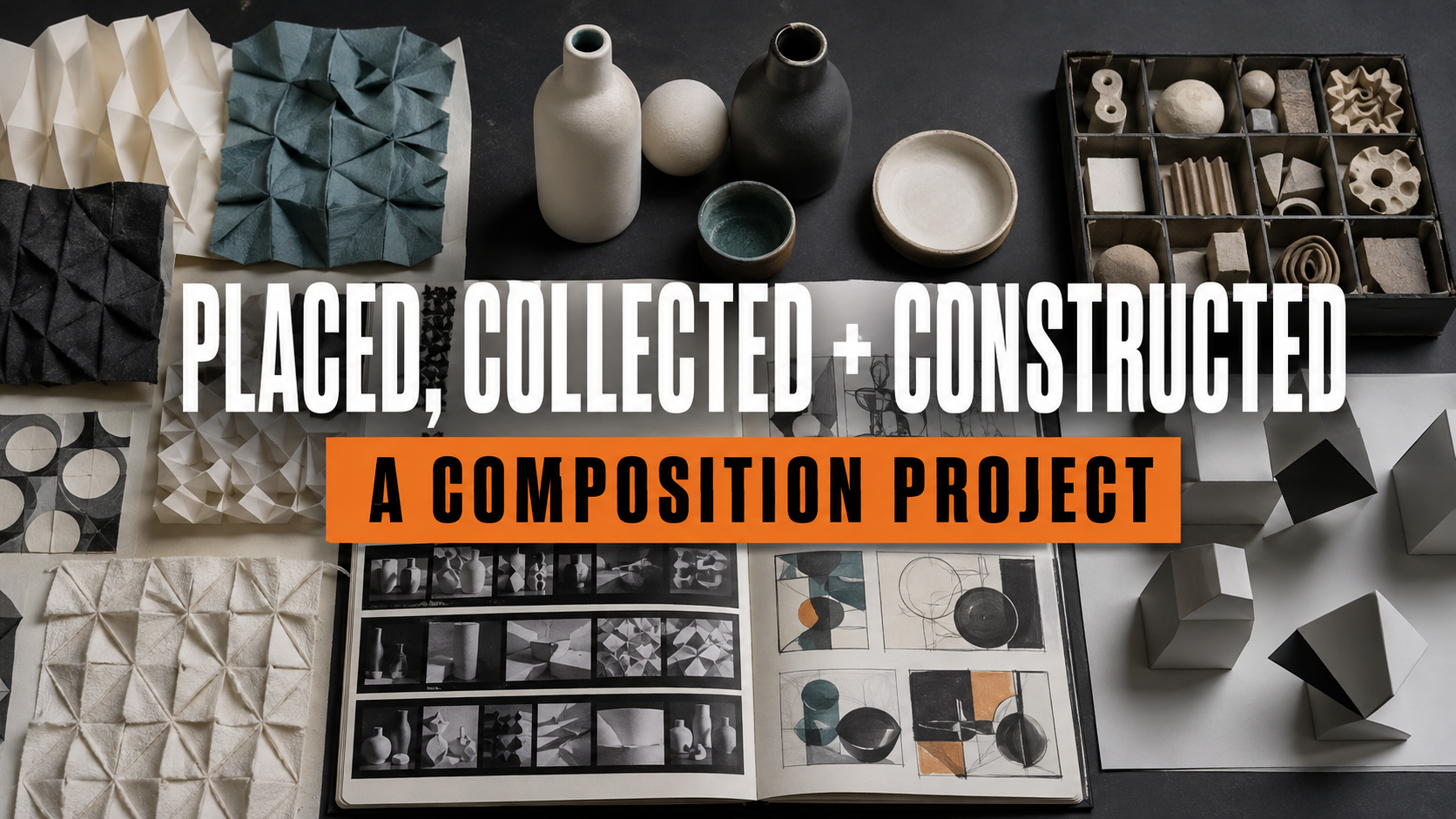
Placed, Collected and Constructed: A Composition Project for GCSE and A Level
Composition begins before a mark is made or a shutter is released. Every decision to repeat, group, separate, overlap, balance, contain or interrupt changes how an image or object is understood. A row of identical shapes can feel ordered; one misplaced element can create tension. A group of possessions can suggest an absent person. A simple arrangement of planes and shadows can become a model for sculpture, architecture or abstract photography.
This broad project is suitable for GCSE and A Level Fine Art or Photography. It offers three alternative pathways—pattern, personal objects, and shape or form—while encouraging you to build the work from first-hand investigation. Choose one pathway and explore it with enough depth for ideas, experiments and decisions to connect.
Suggested project or controlled-test starting point
Placed, Collected and Constructed
The relationship between visual elements can be as important as the elements themselves. Repetition can establish rhythm; possessions can reveal identity or memory; and simple shapes can be combined into complex physical or photographic structures. Creative practitioners organise line, colour, surface, volume, space and object in order to guide attention, establish meaning or disrupt expectation. Research relevant sources, collect your own visual evidence and develop a personal response through one of the following pathways:
- Rhythm, Surface and Ornament
- Objects That Carry Stories
- From Shape to Structure
A reminder about originality: researching an artist does not mean reproducing one of their compositions. Identify a principle, process or idea that matters to your enquiry, test it using material you have gathered yourself, and then make decisions that lead somewhere personal.
Arrangement is not the same as tidiness
An effective arrangement may be precise, crowded, sparse, unstable, symmetrical or deliberately awkward. The essential point is that the relationships feel intentional. Moving an object only a few centimetres can alter the negative space around it. Rotating a repeated unit can interrupt a predictable rhythm. Cropping a group at the edge of a photograph can make it appear to continue beyond the frame.
Balance
Symmetry can create stability. Unequal elements can still balance through differences in size, tone, colour or position.
Rhythm
Repeated intervals, colours, edges or forms can lead the eye. Variation prevents repetition from becoming mechanical.
Hierarchy
Scale, contrast, focus, isolation and placement determine what is noticed first, second and last.
Negative space
The gaps between things are active shapes. Empty space can isolate, connect, frame or create tension.
Contrast
Smooth against rough, transparent against solid, small against large or ordered against irregular creates visual energy.
Viewpoint
An overhead, eye-level or low viewpoint can make the same arrangement appear like a diagram, still life or landscape.
Pathway 1: Rhythm, Surface and Ornament
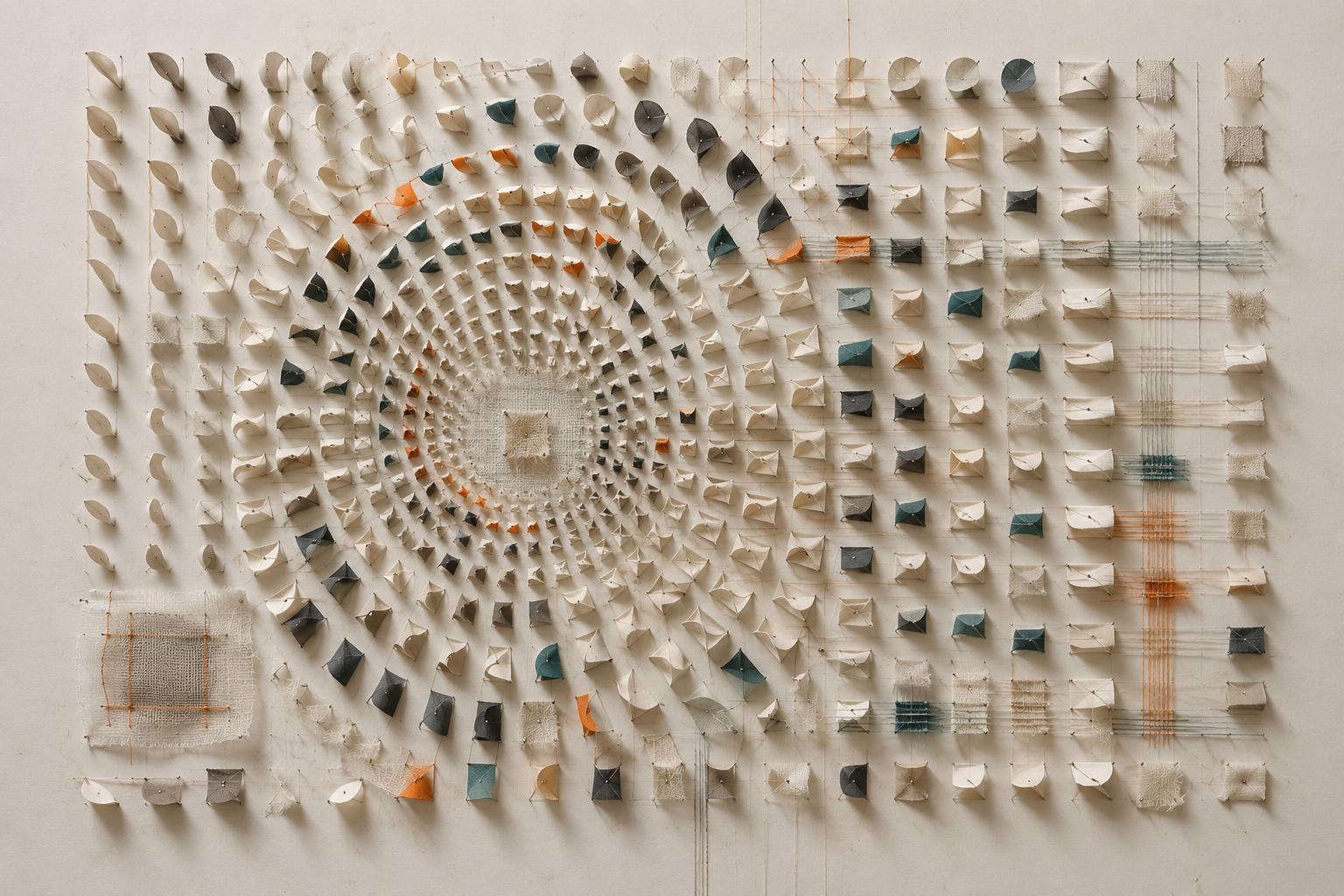
Pattern can grow from geometry, plants, buildings, handwriting, maps, packaging, sound, movement or daily routine. Decoration is not automatically superficial: ornament can communicate culture, identity, celebration, status, protest or belonging. The strongest projects investigate where a pattern comes from and what changes when it is repeated, enlarged, broken, layered or placed on a particular surface.
Michael Brennand-Wood combines textile traditions with wood, thread, paint, glass, collage and digitally produced elements. His constructions are valuable for studying how numerous small units can operate differently from a distance and close up. Look at density, layering, rhythm, shadow and the point at which an ordered structure becomes visually complex.
Anni Albers explored line, knotting, texture and pattern through weaving and printmaking. Bridget Riley demonstrates how carefully controlled repetition can produce movement and uncertainty in the viewer’s perception. These practitioners suggest very different routes: tactile construction and material structure on one hand, precise optical organisation on the other.
Fine Art possibilities
- Collect small motifs from first-hand drawings or photographs, simplify them and test several repeat systems.
- Compare a rigid grid with a pattern that expands, rotates, clusters or gradually dissolves.
- Cut, fold, weave, stitch, layer or suspend repeated units so shadows become part of the design.
- Interrupt a monochrome arrangement with one colour, texture or displaced unit and evaluate how attention changes.
- Apply the same motif to paper, fabric, relief and a three-dimensional object to test how surface affects meaning.
Photography possibilities
- Photograph repeated structures found locally: windows, railings, shelving, shadows, road markings or rows of objects.
- Create a typology using identical framing, then decide whether differences or similarities should dominate.
- Use reflection, multiple exposure, projection or collage to layer two different pattern systems.
- Explore how cropping turns a real object or building into an abstract field of line, colour and rhythm.
- Make a photographic pattern from repeated actions or intervals of time rather than repeated physical objects.
Pathway 2: Objects That Carry Stories
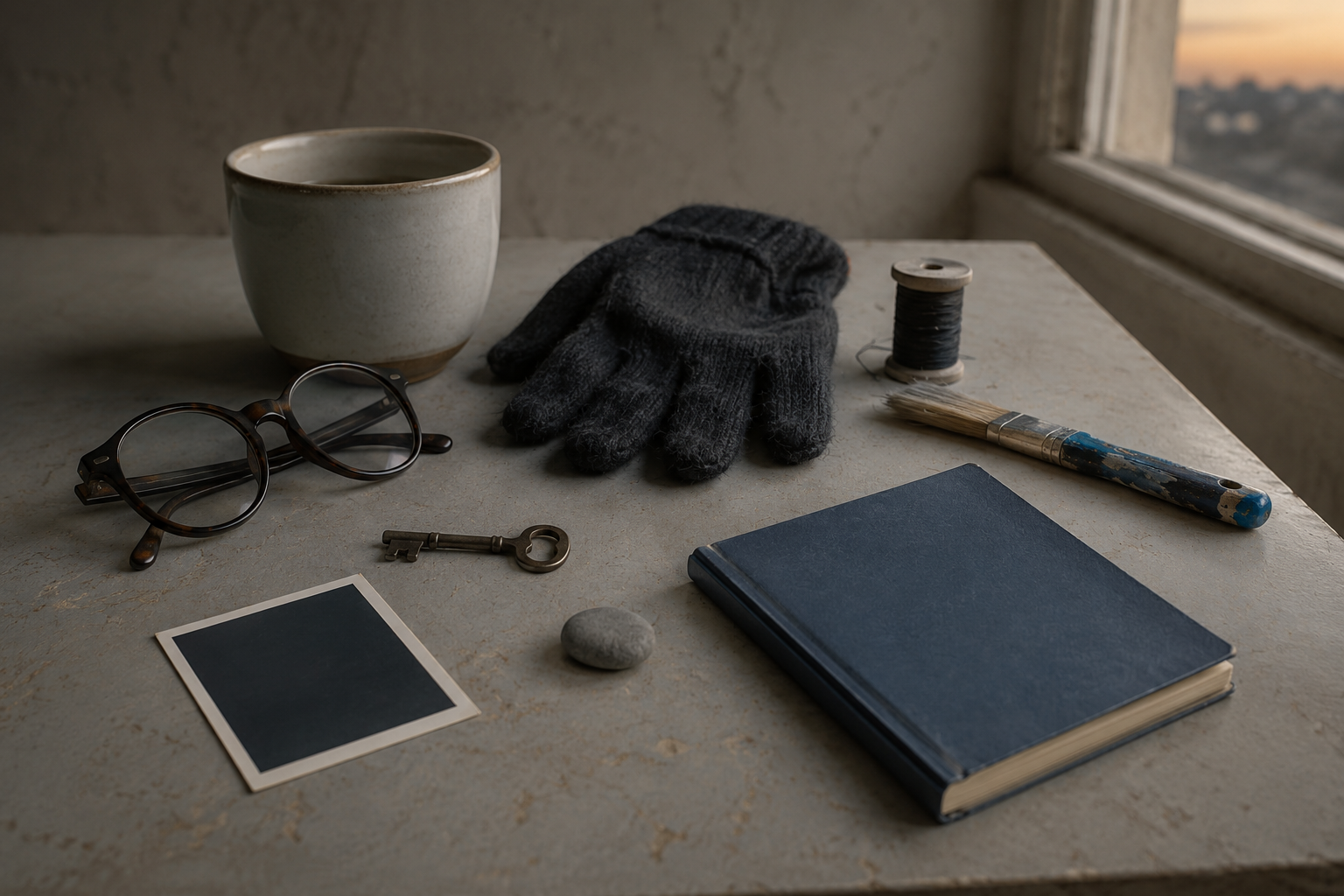
Belongings can function as indirect portraits. A worn object records handling; a collection reveals habit; something kept after it has lost its practical use may carry memory. You might arrange objects connected with one person, one activity, one journey, one room or one period of change. The meaning comes from selection and relationship, not simply from placing attractive things together.
Giorgio Morandi repeatedly arranged modest bottles, bowls, jars and pitchers, reducing familiar containers to quiet relationships of volume, interval, colour and tone. His work is especially useful for studying how tiny changes in height, overlap and spacing affect a composition.
Joseph Cornell placed found objects and fragments inside shallow boxes, turning containment and juxtaposition into poetic associations. His approach can prompt questions about memory, travel, collecting and the relationship between a whole world and a limited space. Photographer Laura Letinsky uses still-life photography to explore domestic remnants, desire, material culture, perception and what remains after an event.
Possible object collections
- Objects carried in one person’s pockets or bag.
- Tools marked by repeated use.
- Items connected with a family routine, cultural practice or shared meal.
- Things kept for emotional reasons despite little financial value.
- Objects that document a journey, hobby, job, illness, move or period of growth.
- Remnants left after an activity rather than the untouched objects before it begins.
Fine Art possibilities
- Draw or paint the same group repeatedly, changing only spacing, viewpoint, crop or light.
- Build a compartmented assemblage in which the position of each object reflects a relationship or hierarchy.
- Combine observational drawing with labels, maps, traces, rubbings or fragments connected with an object’s history.
- Create casts, impressions or silhouettes of belongings so absence becomes more important than the object itself.
- Use exaggerated scale to turn a small personal item into a sculptural or painted environment.
Photography possibilities
- Photograph a person through their objects while keeping the person outside the frame.
- Compare a deliberately arranged still life with the same objects found naturally in use.
- Use a consistent background and viewpoint to create a typology, archive or inventory.
- Stage an impossible or unsettling relationship between familiar objects through scale, suspension, reflection or montage.
- Photograph what remains after a meal, celebration, repair, studio session or journey.
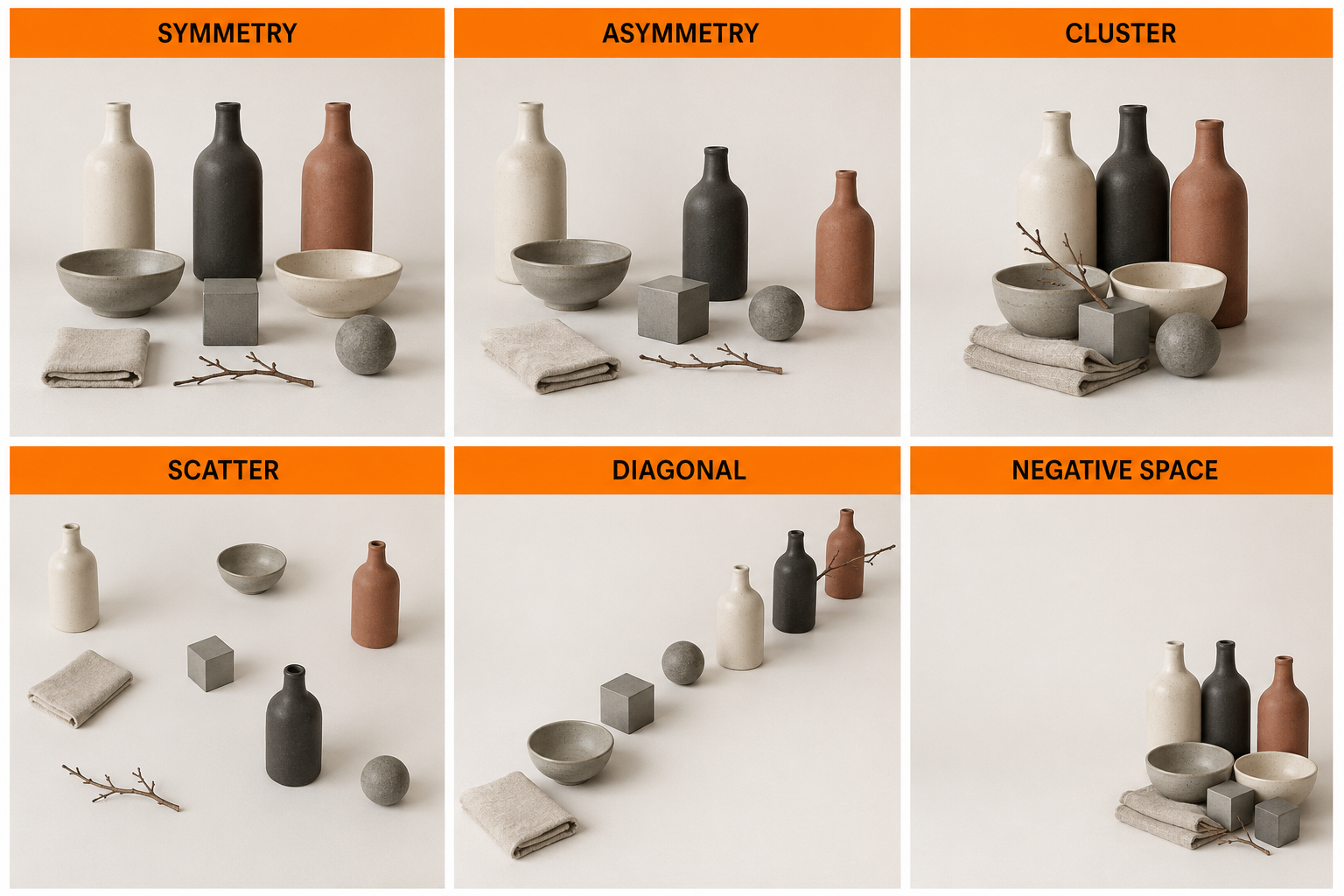
This six-image study demonstrates why a contact sheet should show development rather than six near-identical frames. Keep the objects and lighting consistent, then change one compositional principle at a time. Annotate what each version makes the viewer notice, where the eye travels and which arrangement best supports your intention.
Pathway 3: From Shape to Structure
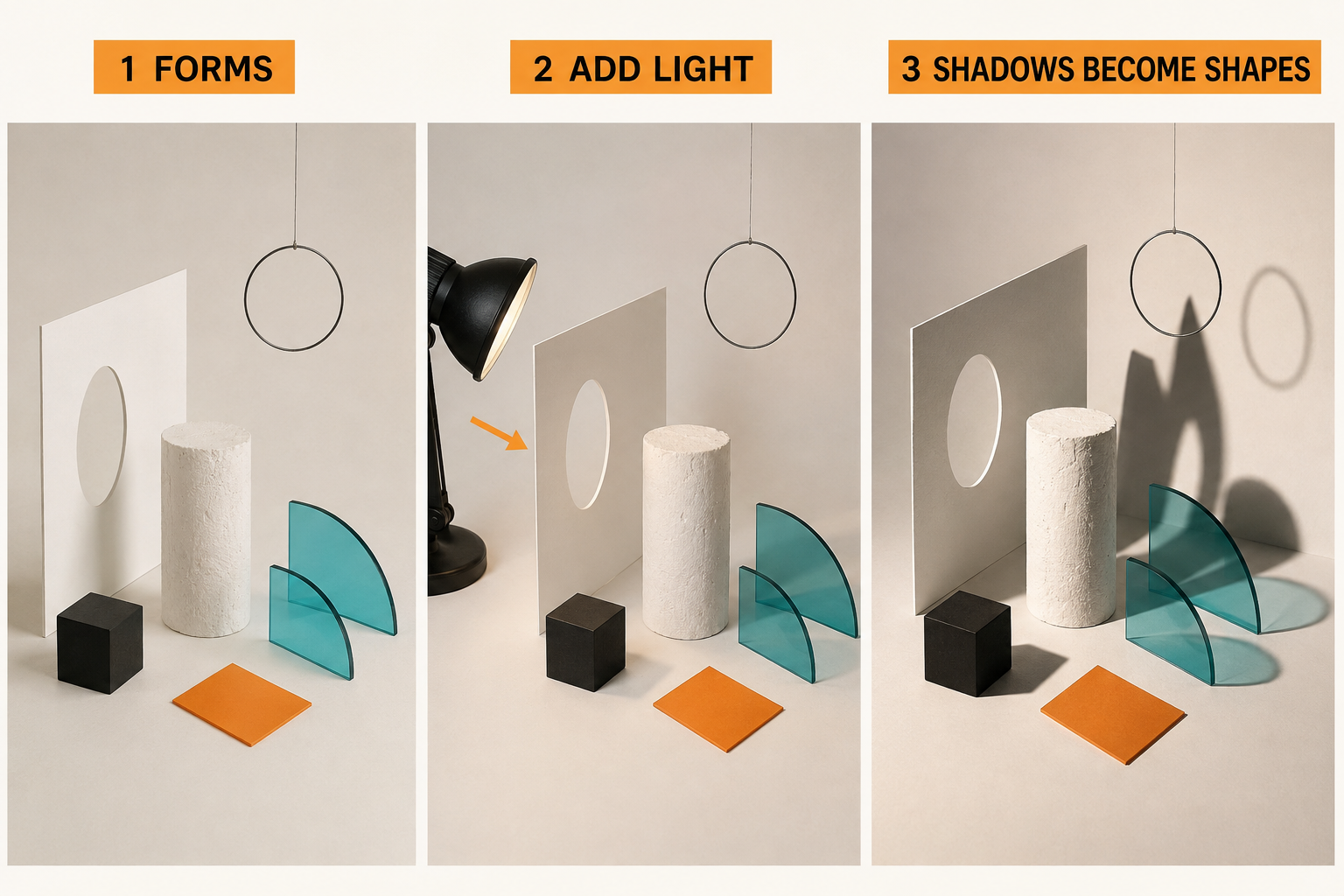
A shape is two-dimensional; a form occupies space. Photography can complicate that distinction because a physical construction becomes a flat image, while light and shadow may make flat materials appear three-dimensional. This pathway can develop through drawing, sculpture, relief, installation, architecture, model-making, photograms or constructed studio photography.
The projects of Rojkind Arquitectos, founded by Michel Rojkind, offer starting points for studying how geometry, material, repeated units, openings and human movement are organised within architecture. Do not simply draw one of the buildings. Extract a relationship—such as solid and void, folded surface or repeated opening—and test it through your own model.
Barbara Hepworth can support an investigation of grouped organic forms, pierced volumes and the active space around sculpture. Photographer Barbara Kasten constructs arrangements of geometry, reflective surfaces and light for the camera, creating images between sculpture, architecture and abstraction. László Moholy-Nagy’s photograms demonstrate how objects, transparency and light can form images without a conventional camera.
Fine Art possibilities
- Turn one drawn shape into folded, repeated, stacked, pierced or interlocking card forms.
- Compare mass and void by cutting openings through plaster, clay, card or layered paper.
- Build a relief in which shadows change as the viewer or light source moves.
- Use wire, translucent material or suspension to make the surrounding air part of the composition.
- Develop a model for a small passage, shelter, pavilion or installation based on a chosen geometric rule.
Photography possibilities
- Construct a temporary studio arrangement from card, mirrors, translucent sheets and simple solids, then photograph rather than preserve it.
- Move one hard light around the construction and record how shadows redraw the composition.
- Crop architectural details until scale and function become uncertain.
- Make photograms or cyanotypes from transparent, perforated and opaque materials.
- Use reflection or projection to combine physical form with an apparently impossible space.

A model does not need to imitate a finished building. It can be a three-dimensional experiment that tests entry, enclosure, repetition, balance, scale and changing viewpoints. Photograph the model from inside, above and at eye level; alter one feature; then compare how the experience of the space changes.
Styles and genres that could change your direction
| Approach | What to investigate | Possible response |
|---|---|---|
| Observational still life | Proportion, overlap, tone, interval and quiet relationships. | Keep the objects constant and develop meaning through repeated changes of arrangement. |
| Vanitas or symbolic still life | Time, loss, consumption, mortality and the symbolic potential of objects. | Build a contemporary group from possessions linked with waste, technology or changing identity. |
| Surreal assemblage | Unexpected juxtaposition, altered scale, containment and dream-like association. | Place familiar items into a relationship that is visually convincing but logically impossible. |
| Pattern and ornament | Repetition, cultural source, labour, decoration and surface. | Develop a motif from first-hand evidence and change its density, material and purpose. |
| Optical abstraction | Movement, after-image, vibration, figure and ground. | Test small changes systematically rather than drawing an effect from imagination. |
| Minimalism | Reduction, material, serial order, scale and the viewer’s movement. | Limit the number of elements and make spacing or physical presence carry the meaning. |
| Constructed photography | Staging, light, illusion, temporary structures and camera viewpoint. | Create the subject for the photograph instead of merely finding it. |
| Typology or archive | Consistency, classification, difference and systems of collecting. | Photograph a carefully defined category using one repeatable visual method. |
| Architecture and installation | Solid and void, entry, sequence, enclosure, rhythm and human scale. | Build and photograph models that test how a person might move through the arrangement. |
More practitioners worth investigating
- Michael Brennand-Wood — mixed-media textiles, dense repeated elements, construction, floral references and optical organisation.
- Anni Albers — weaving, line, structure, texture and pattern as a practical and intellectual system.
- Bridget Riley — perception, repetition, visual rhythm, colour interaction and apparent movement.
- Giorgio Morandi — modest vessels, restricted colour, repeated looking and the importance of tiny spatial adjustments.
- Joseph Cornell — found material, boxes, private collections, memory, containment and poetic association.
- Laura Letinsky — staged and residual still life, domestic space, material culture and uncertain photographic space.
- Barbara Hepworth — grouped organic forms, piercing, mass, void and the relationship between sculpture and surrounding space.
- Barbara Kasten — constructed geometric photography using sculptural elements, reflection, coloured material and theatrical light.
- László Moholy-Nagy — light, transparency, photograms, experimental photography and relationships between two and three dimensions.
- Rojkind Arquitectos — geometry, folded surfaces, repeated openings, architectural sequence and experiential space.
Fifteen possible project beginnings
- One unit, one hundred changes: repeat a hand-made element while gradually altering size, direction, colour or density.
- The broken pattern: create order, then decide what one disruption might communicate.
- Decoration with a history: investigate a pattern connected with family, place or culture and transform it through your own observations.
- Patterns of routine: record repeated journeys, gestures or actions rather than decorative motifs.
- Pocket portrait: arrange only the objects a person carries each day.
- What remains: photograph or assemble the remnants after an event or activity.
- Objects I cannot discard: explore why inexpensive belongings acquire emotional value.
- A collection inside a box: create a contained world organised by memory, place or imagined narrative.
- An absent person: communicate character without showing a face or body.
- Same objects, different meaning: show how composition alone can change the interpretation of one collection.
- Shadow architecture: build temporary forms whose shadows are as important as the structures.
- Solid and void: develop one shape through cutting, piercing, folding, casting and layering.
- Uncertain scale: photograph a small construction so it could be read as a sculpture, room or building.
- Transparent, translucent, opaque: investigate how materials transmit, interrupt or block light.
- A structure for one action: design a small space around sitting, listening, waiting, meeting or moving through.
A Fine Art route through the project
- Gather first-hand material: draw objects, photograph arrangements, collect permitted surfaces and record shapes or repeat structures.
- Investigate selectively: choose practitioners for specific reasons—perhaps containment, repetition, negative space or material contrast.
- Test relationships: make small, quick compositions before investing time in a large outcome.
- Change the physical language: move between drawing, paint, print, collage, textile, relief, assemblage or sculpture where appropriate.
- Compare and refine: identify which arrangement most effectively communicates the intention and develop it through scale, material and presentation.
- Realise the response: ensure the final work grows from the tested relationships rather than simply becoming a larger version of the first idea.
A Photography route through the project
- Define the idea: decide whether the work concerns visual order, identity, memory, material, perception or physical space.
- Control the variables: change one factor at a time—arrangement, viewpoint, lens, crop, focus, light or background.
- Use contact sheets critically: mark selections, explain weaknesses and make the next shoot answer a clear question.
- Construct as well as observe: create temporary still lifes, pattern systems or geometric sets specifically for the camera.
- Experiment with process: consider photograms, cyanotype, multiple exposure, collage, projection, reflection, sequence or book form where they support the intention.
- Edit a coherent series: select images for relationships across the set, not only for their individual impact.
- Present deliberately: spacing, scale, order and physical installation are themselves arrangements and should reinforce the work.
For subject-specific guidance, visit the guides to GCSE Photography and A Level Photography.
GCSE and A Level: what should be different?
| GCSE | A Level |
|---|---|
| A clear personal interpretation developed from relevant first-hand material. | A more sustained enquiry driven by a focused question, concept or problem. |
| Research explains what is useful about a practitioner and informs visible practical decisions. | Contextual investigation is selected independently, analysed critically and connected with wider ideas or debates. |
| A purposeful range of compositional and material tests with growing control. | More searching experimentation that challenges conventions and evaluates alternative interpretations. |
| Development is easy to follow from initial arrangement to resolved response. | Meaning, process, selection and presentation operate together across a coherent body of work. |
| Annotation records choices, discoveries and next steps clearly. | Reflection is precise, analytical and able to address ambiguity, limitations and changes of intention. |
A Level is not distinguished by producing more objects, more photographs or more pages. It requires greater independence, conceptual depth, discrimination and control. GCSE students can also be ambitious, but the project must remain manageable and its development should be communicated clearly.
Questions that can move the work forward
- What changes when I rearrange the same elements rather than introducing new ones?
- Where does the viewer look first, and have I made that decision deliberately?
- Are the empty spaces contributing to the composition?
- Does repetition create rhythm, monotony, pressure, order or instability?
- Why have I chosen these particular belongings, forms or motifs?
- Could a change of scale, viewpoint or material produce a more personal interpretation?
- What did my latest test reveal that I could not have predicted?
- Am I learning from an artist’s thinking, or merely borrowing their appearance?
- How will the final presentation itself become part of the arrangement?
A strong arrangement makes every relationship count
You do not need rare objects, expensive materials or a complicated studio. Begin with elements you can observe, move, revisit and understand. Test alternatives rather than settling for the first attractive solution. When spacing, repetition, form, light and viewpoint all support the same intention, an arrangement becomes much more than a collection of things.
No responses yet