
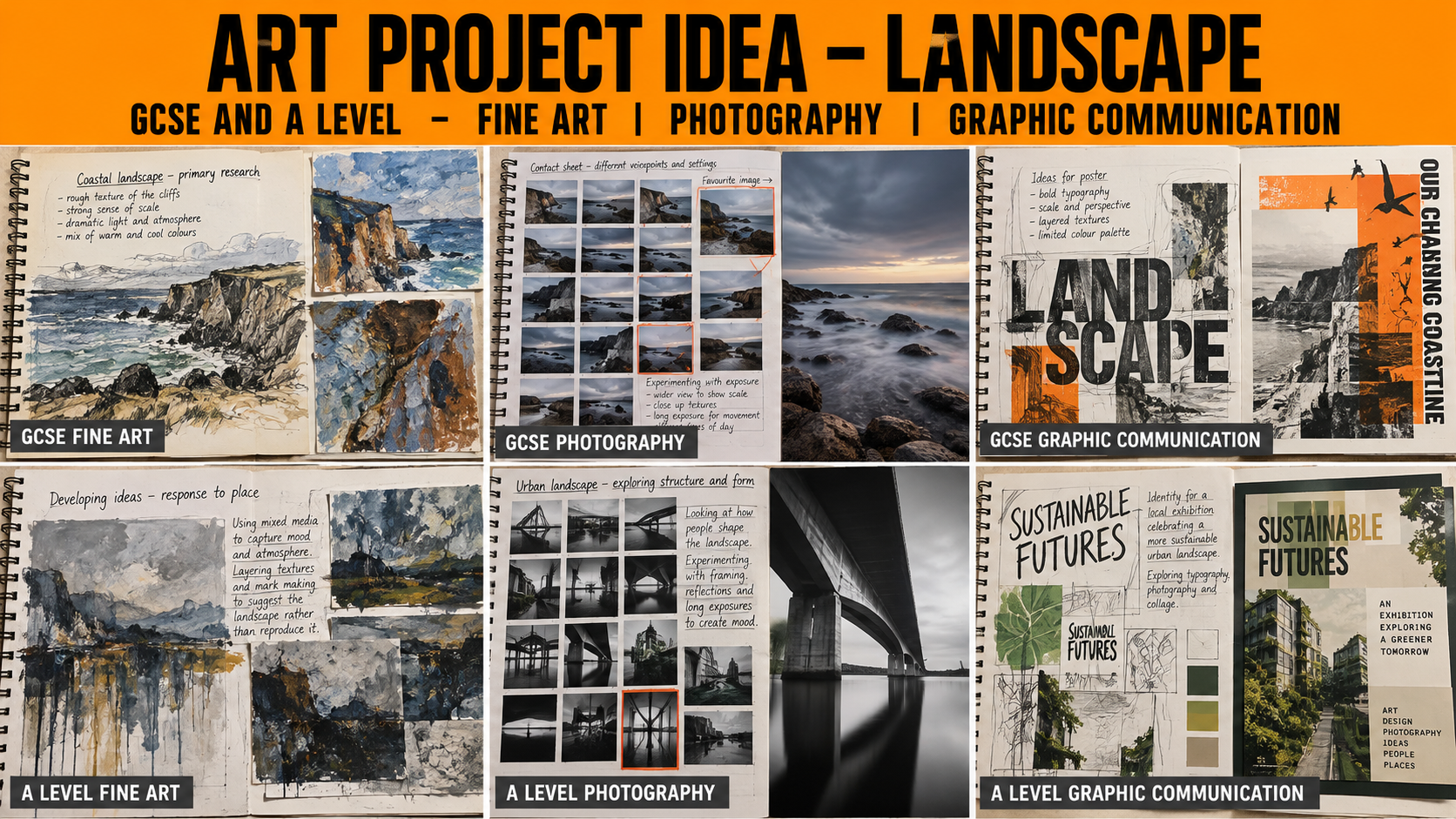
Looking for landscape art project ideas? Explore rural, urban and industrial landscapes through Fine Art, Photography or Graphic Communication. This project starter is suitable for GCSE and A Level Art and Design students.
Landscape: A Sense of Place
Where you live can be the starting point for an exciting art project. You don’t need mountains, dramatic coastlines or famous buildings. A street you walk along every day, an abandoned factory, a railway bridge, a local park or the view from your bedroom window could provide everything you need.
Choose a rural, urban or industrial landscape that interests you. Investigate it through your own drawings, photographs and observations, then develop an original response.
GCSE and A Level Fine Art ideas
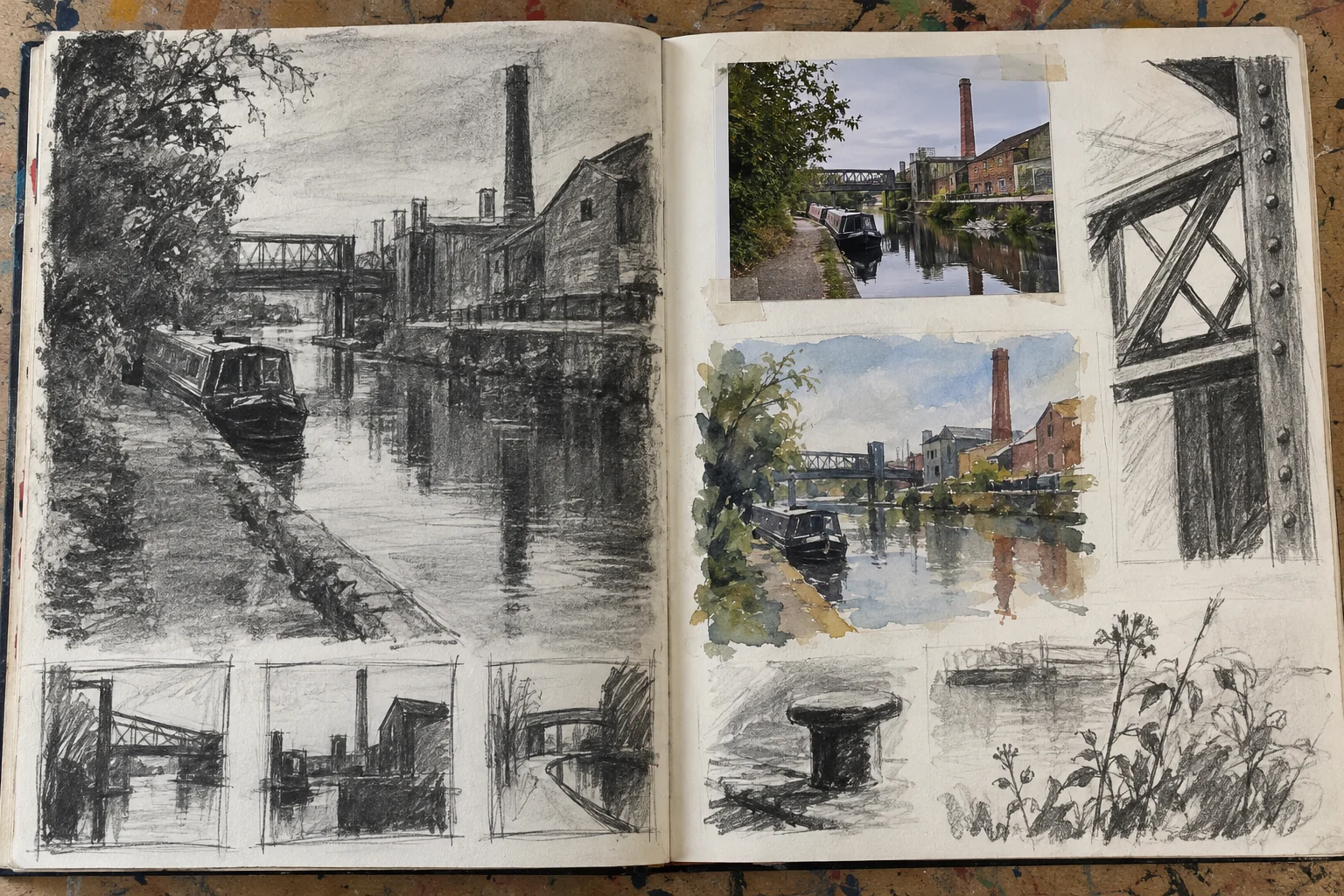
GCSE: Explore a local landscape through observational drawing, painting, collage, mark-making and texture. Experiment with colour and composition before creating a personal outcome.
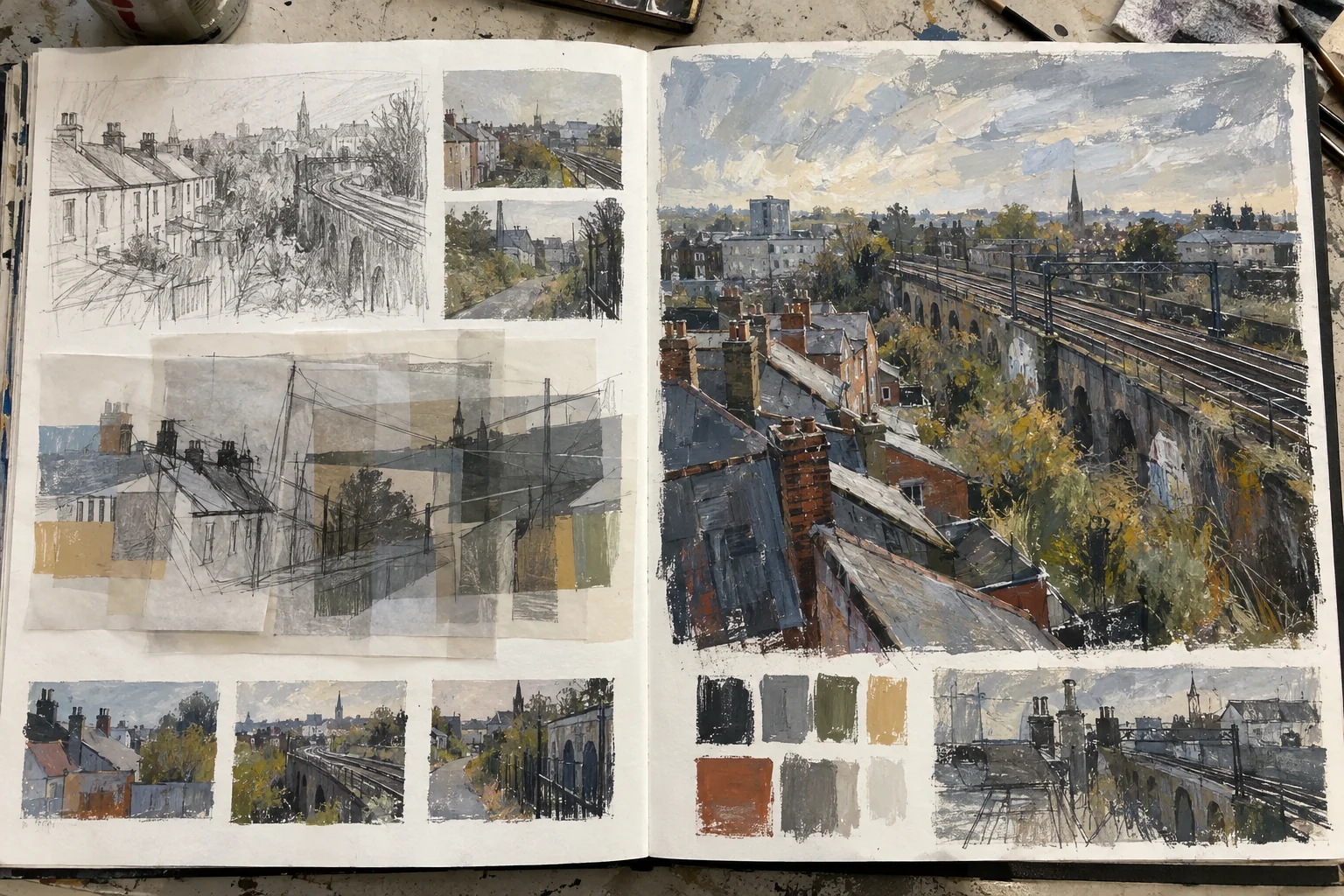
A Level: Investigate how memory, atmosphere, abstraction or human activity shapes our experience of place. Develop a sustained enquiry and critically evaluate your material choices.
GCSE and A Level Photography ideas
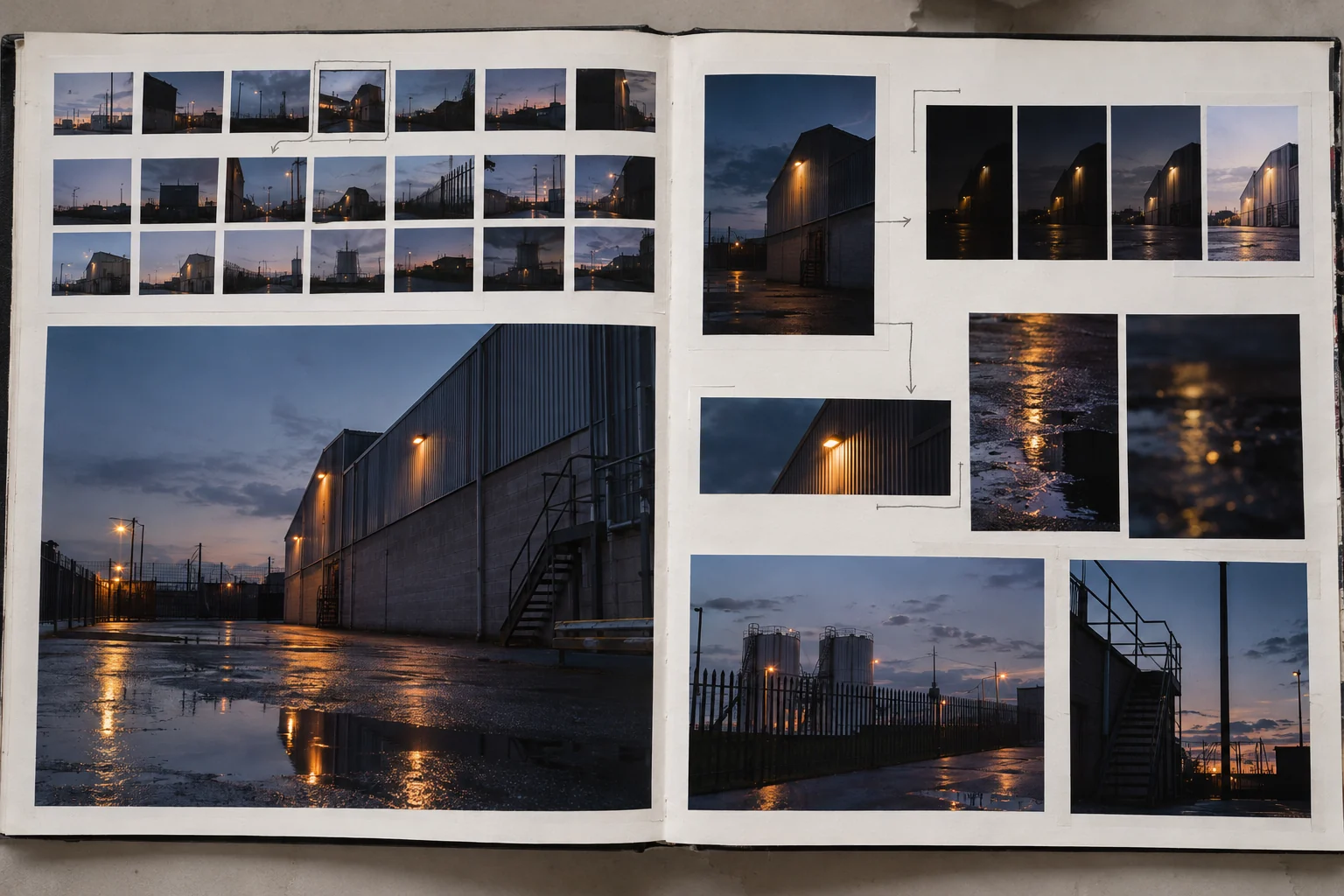
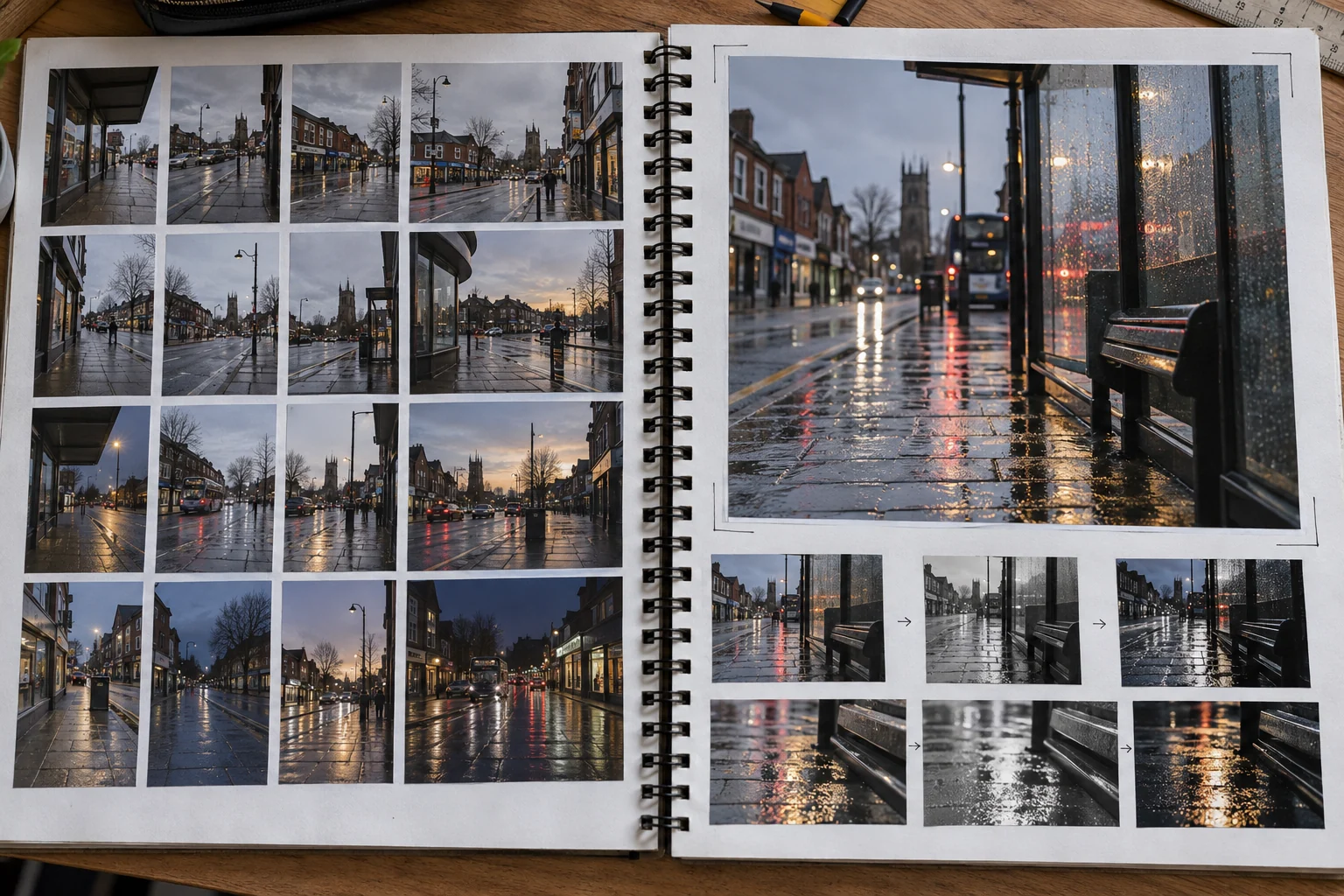
GCSE: Photograph a familiar location from different viewpoints, in changing weather and light. Use contact sheets to select your strongest photographs and explain your choices.
A Level: Produce a coherent photographic series examining place, identity, transformation or absence. Explore sequencing, exposure, viewpoint and editing as part of your visual investigation.
GCSE and A Level Graphic Communication ideas
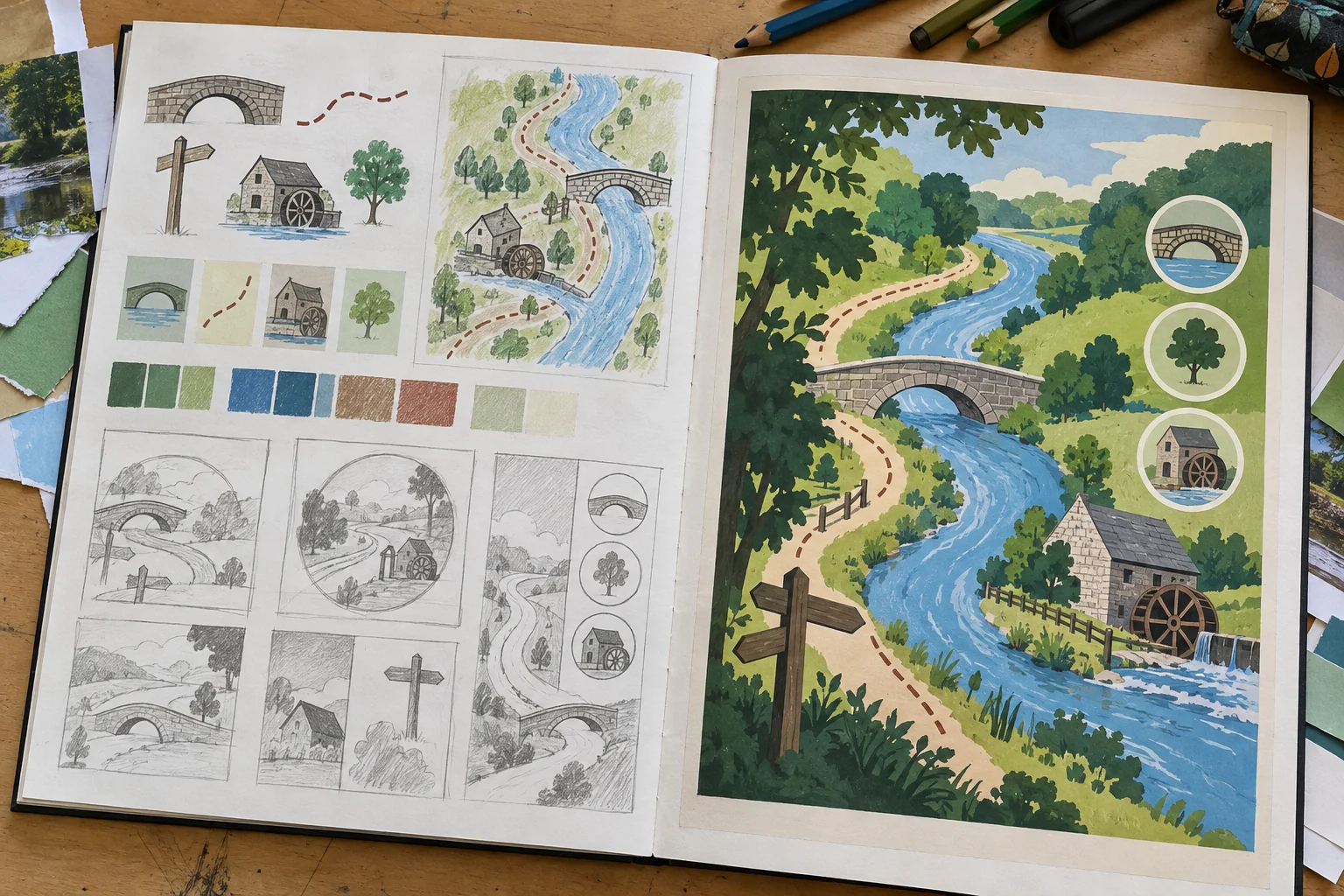
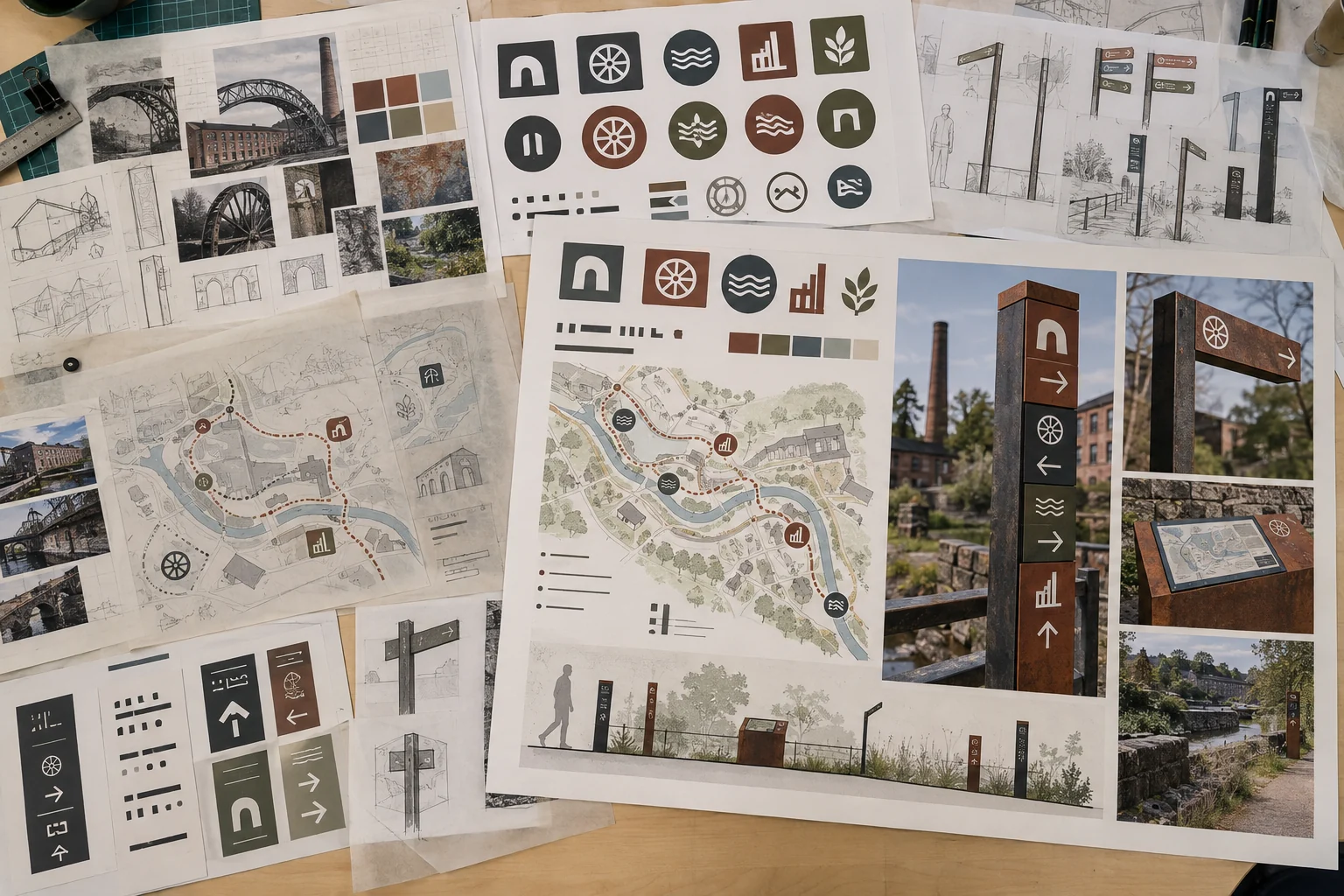
GCSE: Design a poster promoting a local landscape, nature reserve or heritage site. Explore photography, illustration, maps, typography and layout.
A Level: Develop a visual identity, editorial publication or campaign exploring the future of a particular environment. Research your audience and justify your design decisions.
How to start your landscape art project
- Investigate: Visit a location, take photographs, draw and record observations.
- Research: Look at relevant artists, photographers or designers and explain what interests you about their approaches.
- Experiment: Try alternative compositions, materials, photographic techniques or graphic treatments.
- Develop: Select promising ideas and show how they change through further work.
- Present: Create a final outcome that communicates your own interpretation of the landscape.
Artists and photographers to research
Fine Art students could investigate John Virtue’s expressive landscapes, George Shaw’s suburban subjects or Edward Hopper’s urban atmosphere. Photography students could explore Jem Southam’s sustained studies of changing places and Bernd and Hilla Becher’s systematic industrial photography. Graphic Communication students might examine how typography, maps and visual identities communicate a sense of place.
What makes a successful landscape project?
At GCSE, show a clear journey from research and observation through experimentation to a personal outcome. At A Level, take greater ownership of your enquiry, make purposeful choices and reflect critically on how your ideas develop. In both cases, avoid simply copying an attractive landscape photograph: show your thinking.
Frequently asked questions
What can I use as a landscape for my GCSE art project?
Try your local park, a street, an industrial building, a canal, a shopping area, woodland or the view from home. Choose somewhere you can revisit and investigate firsthand.
Do I have to paint a landscape?
No. You could work with drawing, photography, collage, printmaking, mixed media, typography or digital design, depending on your course and intentions.
How can I make my A Level landscape project more original?
Develop a focused question about place, memory, change or identity, collect your own primary research and test different ways to communicate your interpretation.
No responses yet